
Xudoyor Atajanov
I build websites, admin panels and business systems for clients from scratch — from idea to a working product.
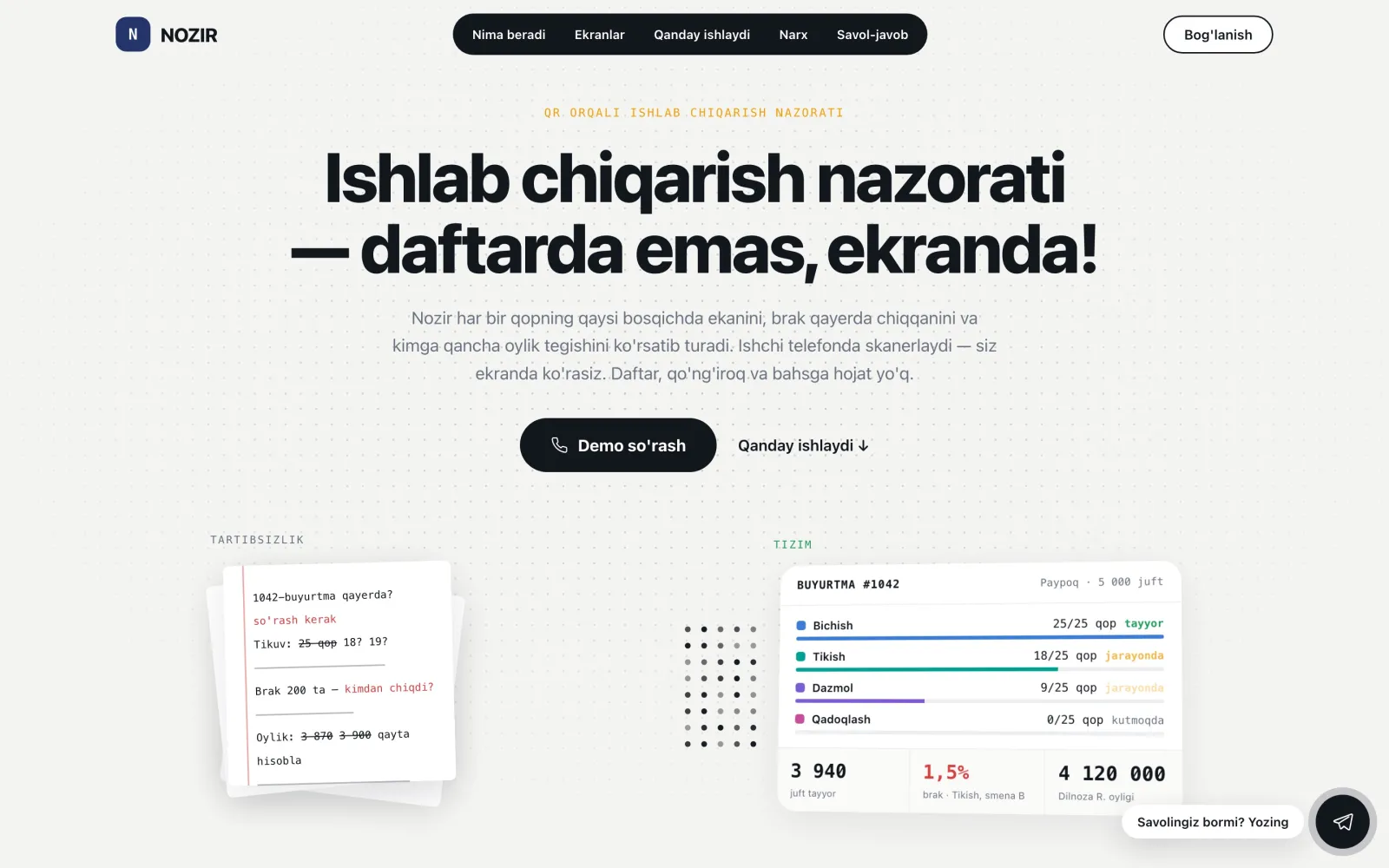
Every bag on the factory floor, tracked by QR
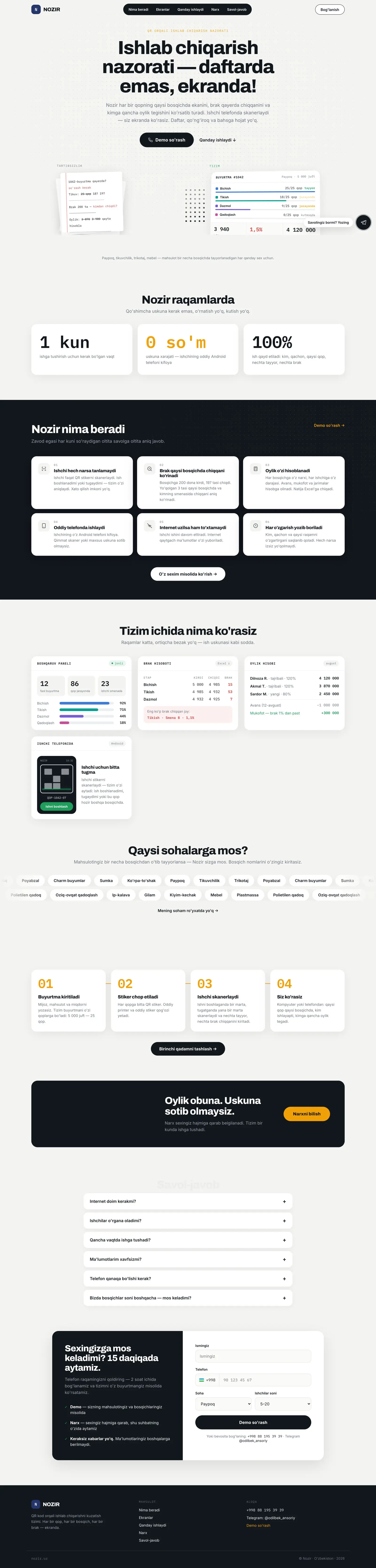
A sock factory's paper-based production flow became QR stickers, a worker app and a live dashboard for the owner.
Problem
Orders moved from workshop to workshop on paper. Which bag was at which stage, where defects came from, who was owed what — nobody could say for sure. Month-end payroll turned into an argument every time.
What I built
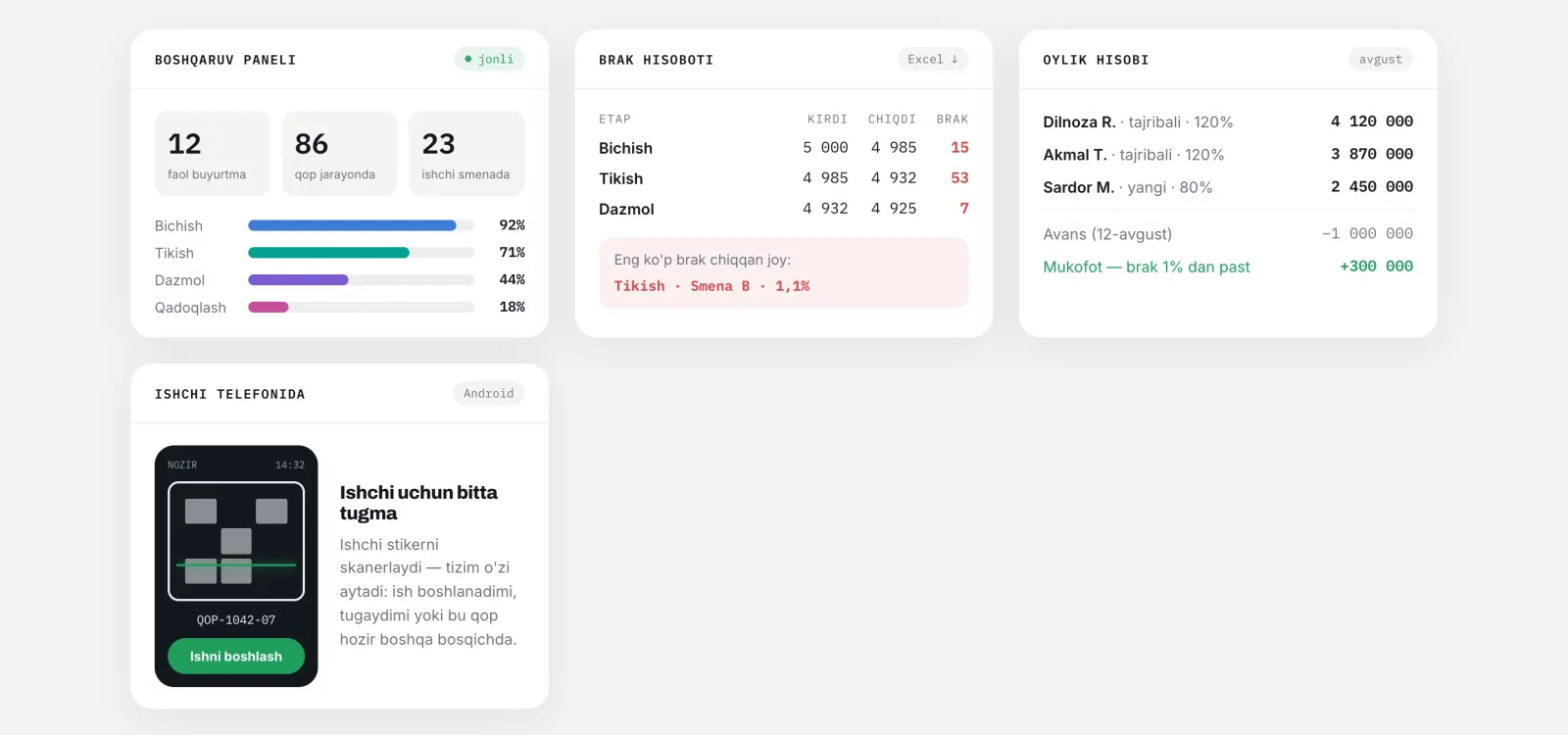
Each order is split automatically into bags of 200 pairs, each with its own QR sticker. Workers log into an Android app with a PIN and scan — knitting, sewing, dyeing, ironing, packing. The owner sees live status, defects and payroll in a web dashboard.
Result
The system runs on the factory floor every day. A second factory, Mango, now runs an independent copy with its own database and app.

A Telegram mini app for a wholesale perfume shop
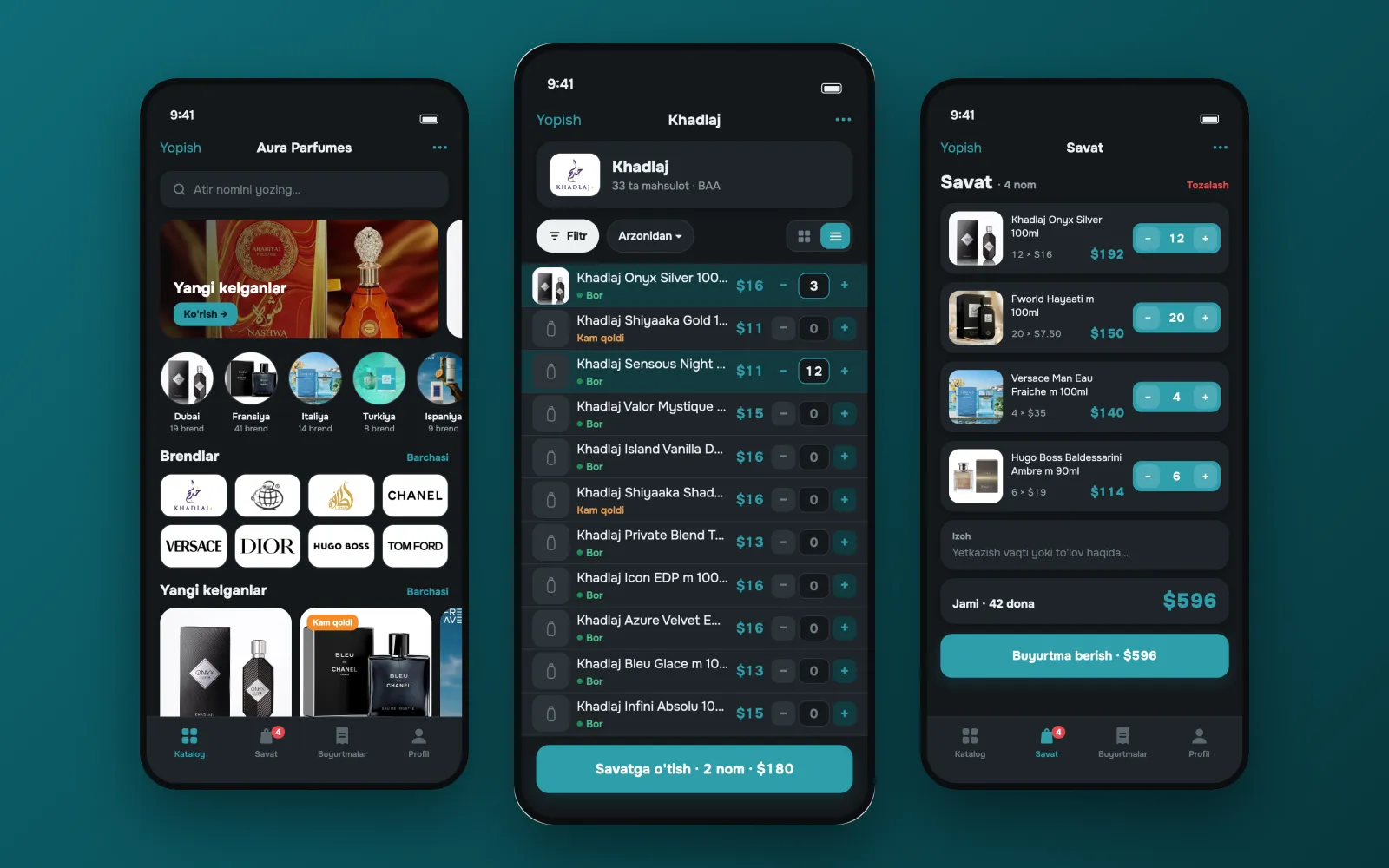
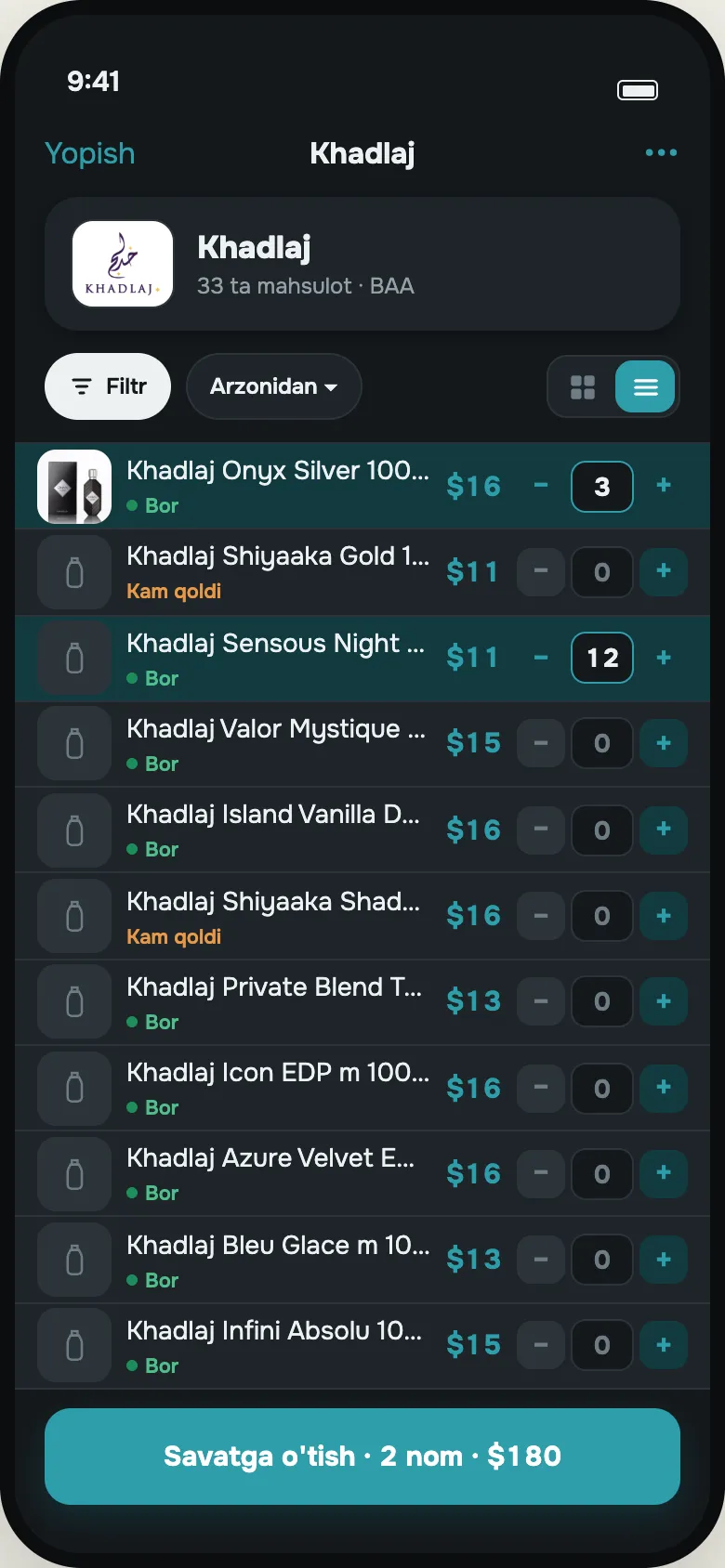
B2B customers order inside Telegram: a 4,560-product catalog, with prices and stock refreshed from the shop's accounting software every five minutes, and each order landing with the seller as a message.
Problem
The whole catalog lived in Unipro on a local server — customers asked for prices and stock by phone and the seller answered by hand every time. The catalog had to go online, but there was no way to reach that software from outside: no static IP, no database access.
What I built
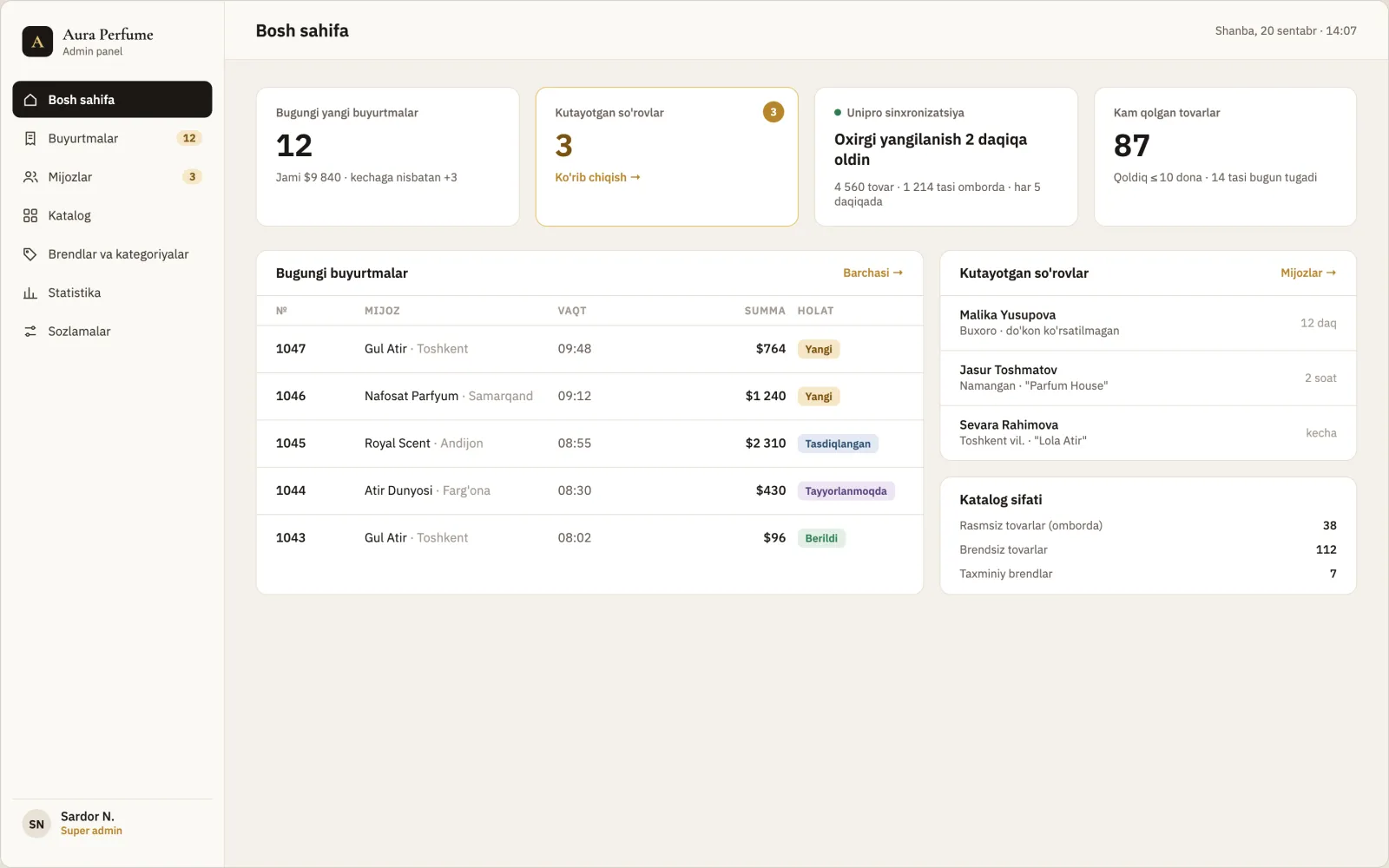
I used Unipro's own 'exchange with an online shop' module: the program pushes the catalog to our endpoint every five minutes — no inbound connection or static IP needed. The 4,560 incoming products get cleaned up: the brand is parsed out of the name (85% of items had no group at all), brand and category are assigned in the admin panel, and stock is shown to customers as 'in stock / low' rather than a number. The mini app is protected by Telegram's initData signature, and a registered customer gets in once an admin approves them. The catalog has two views: cards, and a price-list for fast ordering. The admin panel covers orders, customer approval, the catalog and images, brands, statistics and sync status.
Result
The mini app and admin panel are running, and the catalog matches the shop's own software. Orders arrive in a dedicated Telegram group and the seller edits them in the admin panel. The system is written to host several shops, so it can be reused.
Turning Excel sales data into a manager's dashboard — a new landing page
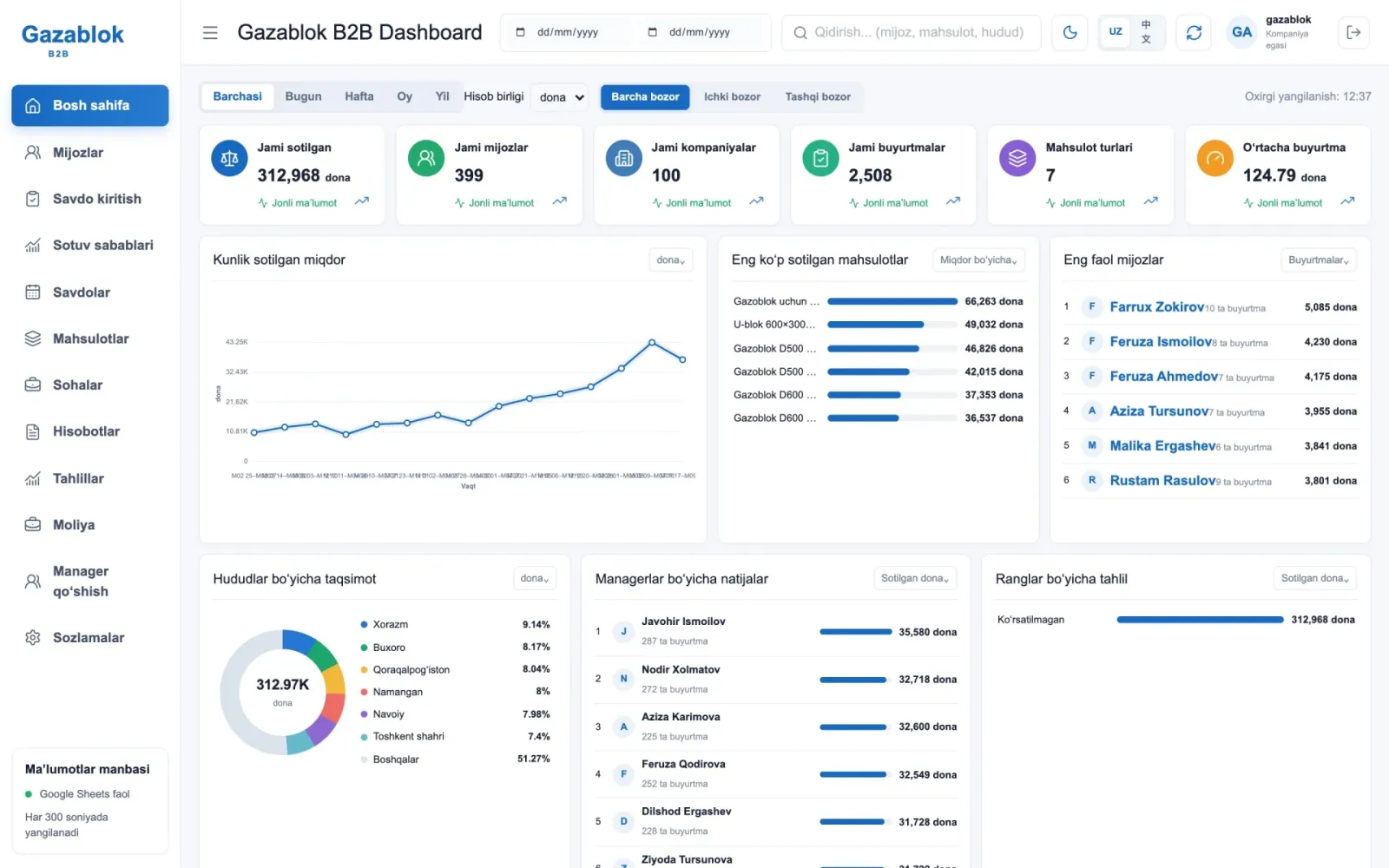
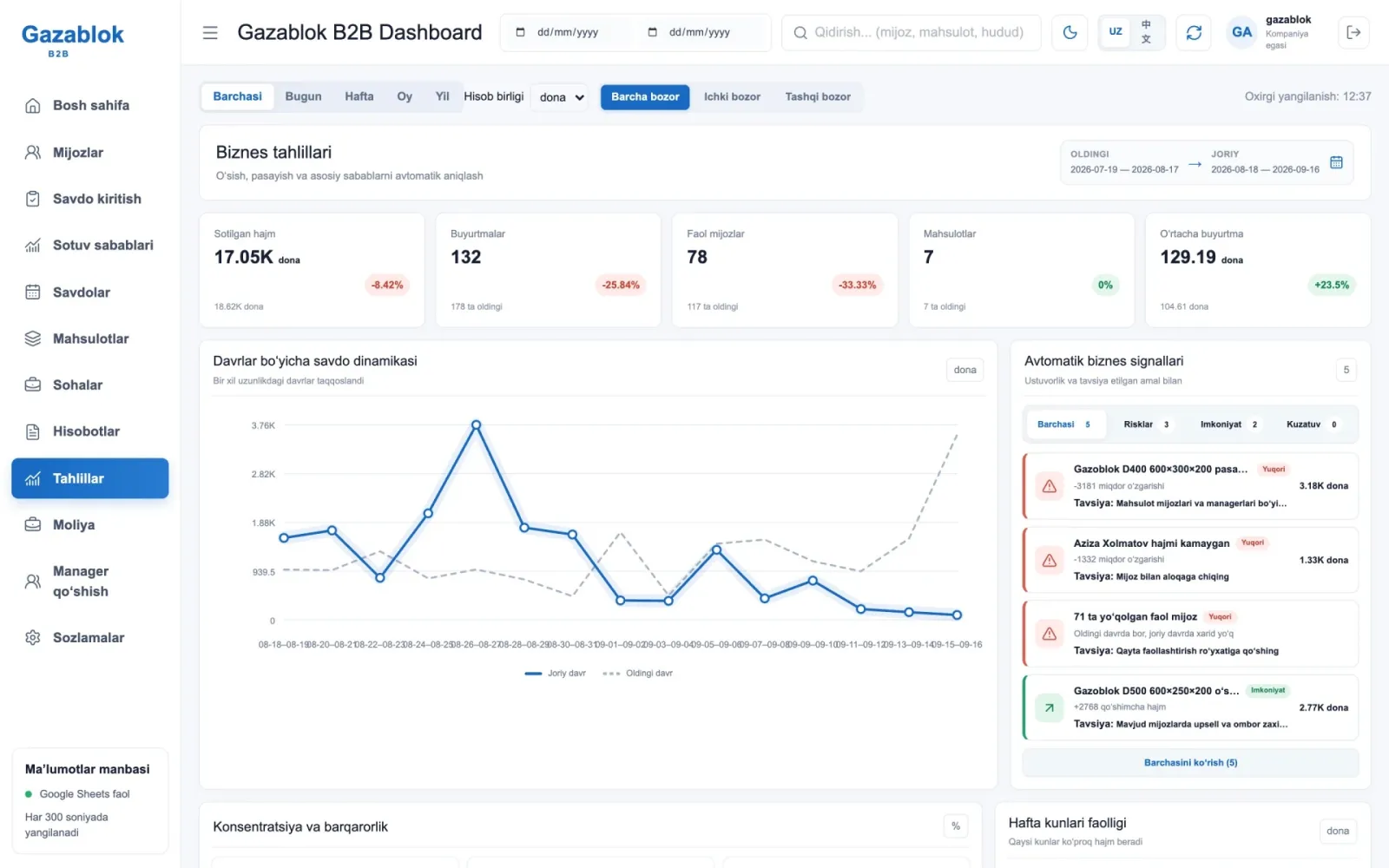
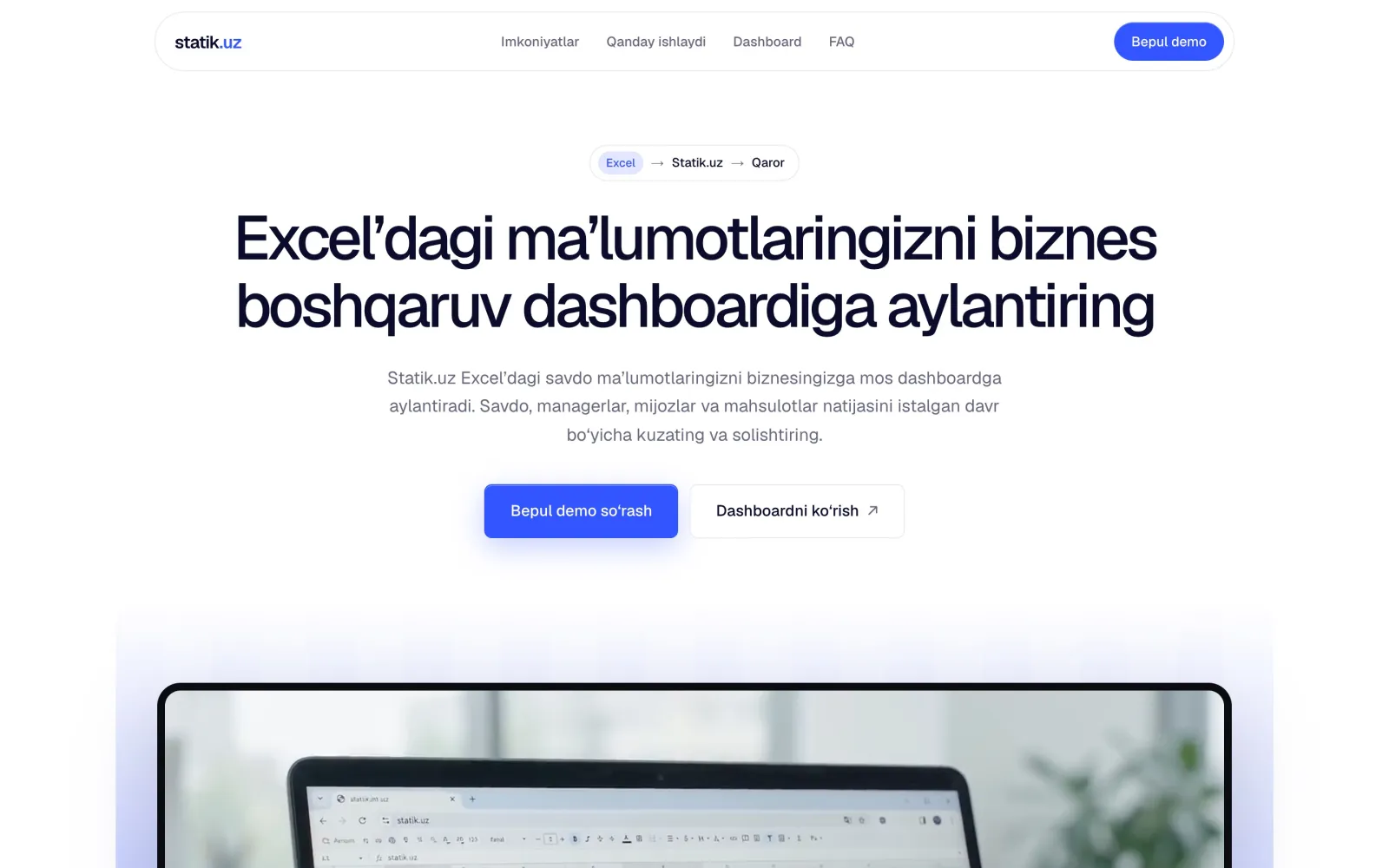
A new landing page for a B2B sales-analytics service: it shows the product through real dashboard screens and collects demo requests.

Problem
Statik.uz turns manufacturers' and distributors' Excel sales data into a dashboard. To sell that, a manager has to see up front how their own sales will look on the dashboard — a plain text page couldn't do it.
What I built
A 'Clarity' landing template designed in Claude Design: an AI video hero, an 'in Excel / with Statik.uz' comparison, a two-period comparison block and real dashboard screenshots. The template is wired into the client's landing editor, so they swap texts, video and images themselves. Deployed on the VPS without touching the database.
Result
The new landing page is live on statik.uz. Along the way I fixed the demo form — it now accepts phone numbers typed with spaces.
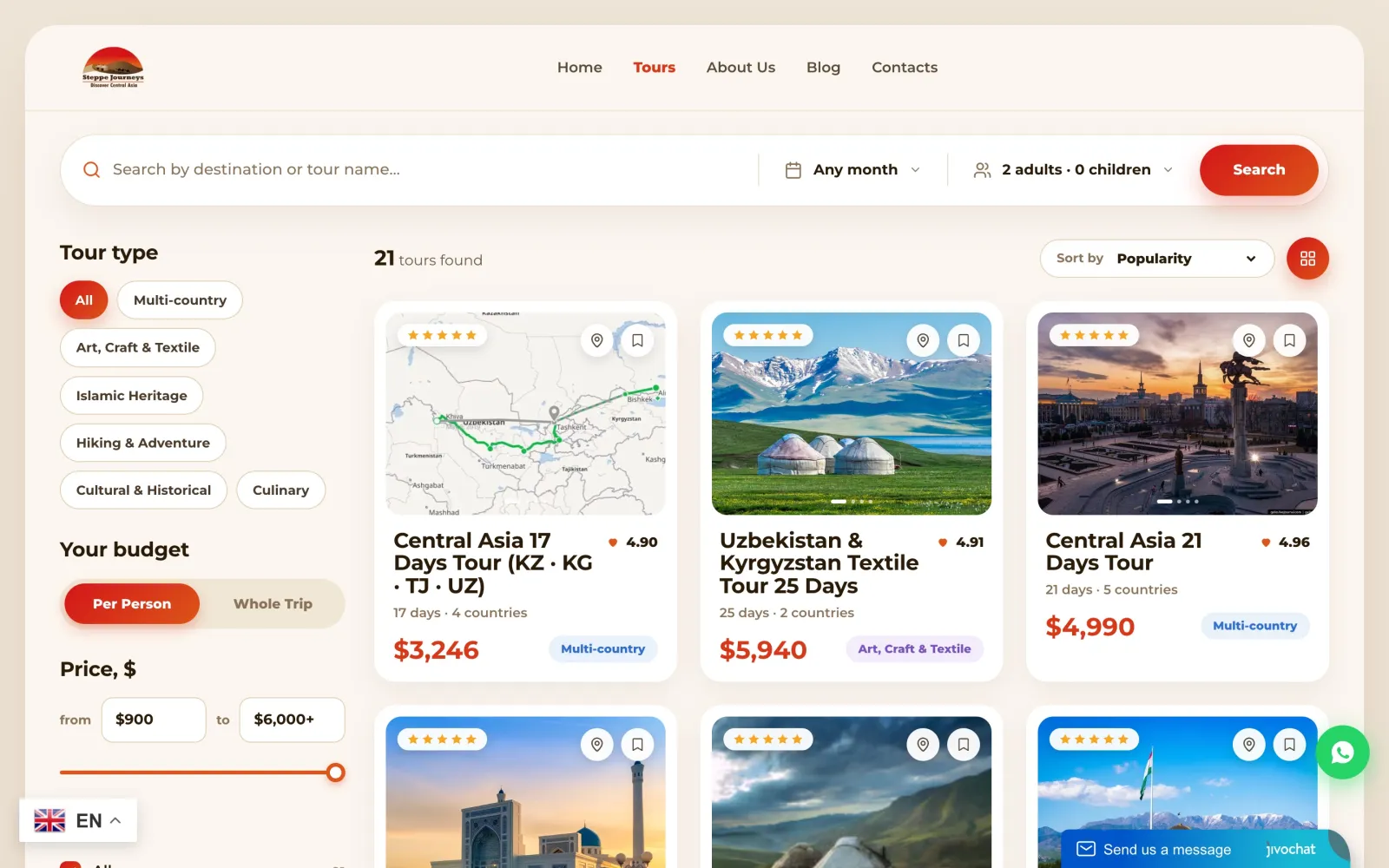
A travel agency site moved from WordPress to fast custom code
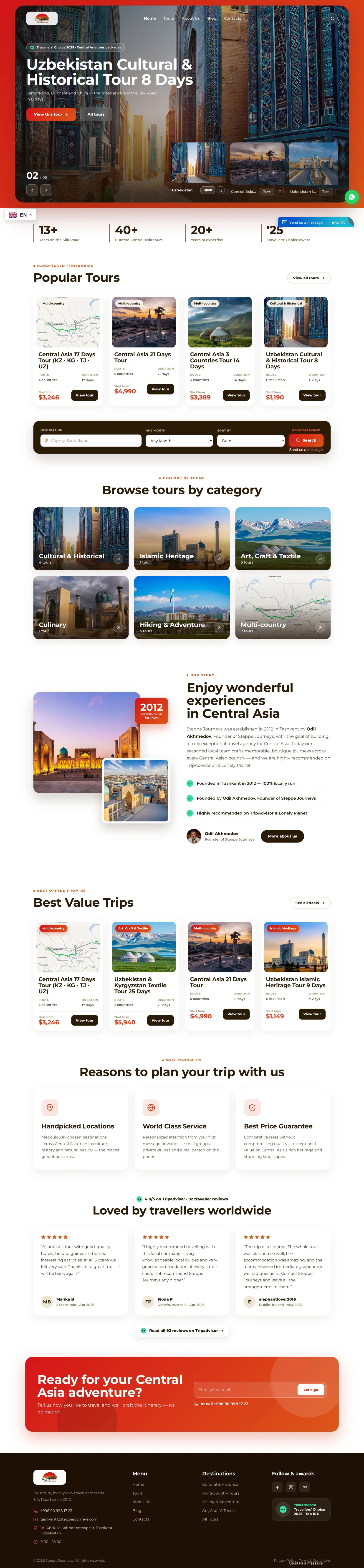
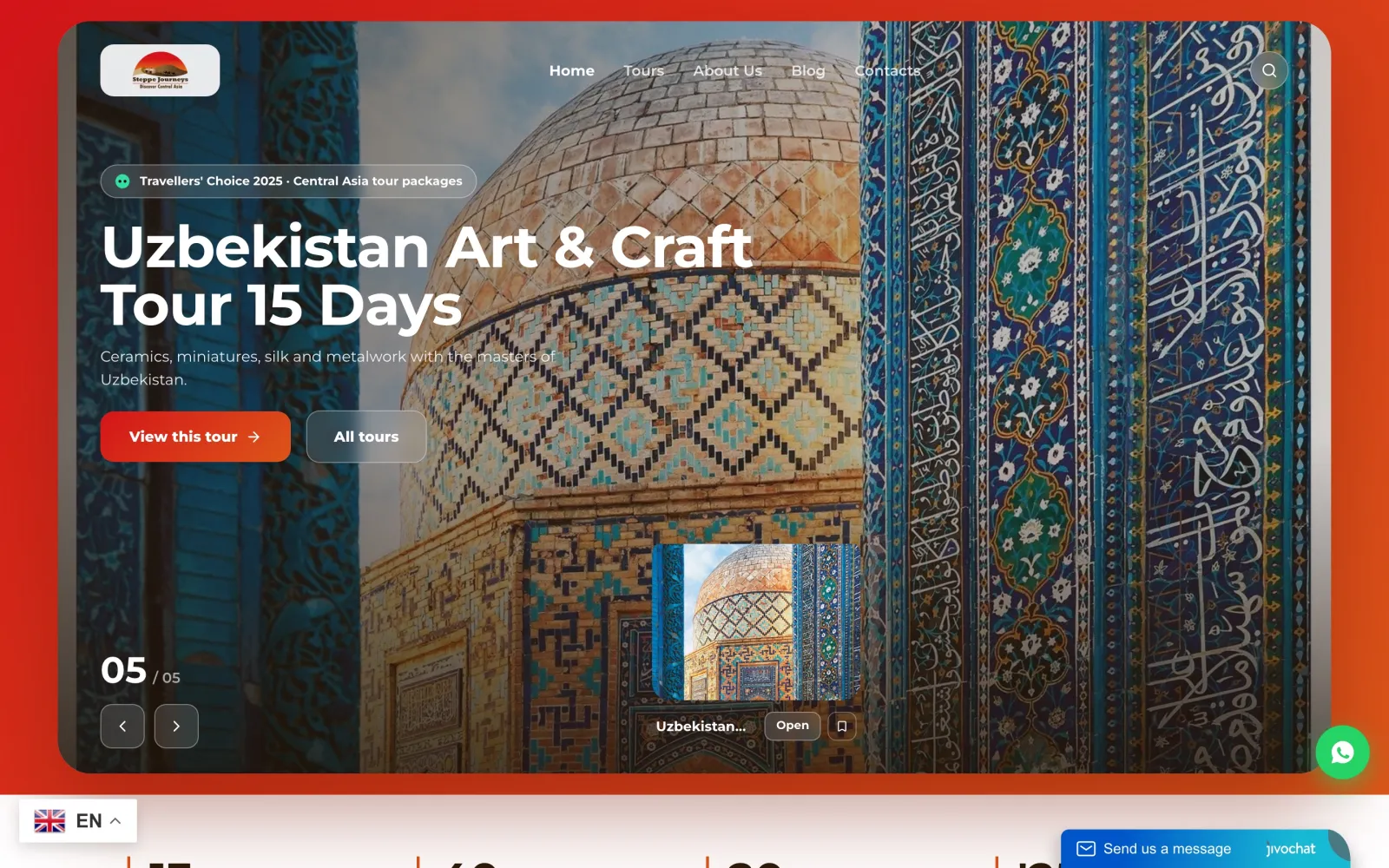
A three-language catalog and a self-managed admin panel for a Tashkent agency operating since 2012.
Problem
The site ran on a heavy WordPress theme: slow to load, awkward for SEO and Google Ads, and every small change needed a developer.
What I built
A site in EN / RU / UZ: a filterable tour catalog, day-by-day itineraries, departure dates, an inquiry form and a blog. Tours, articles and inquiries are managed in the admin panel without a developer.
Result
Delivered in 2 weeks. The marketing team now adds new tours on its own.

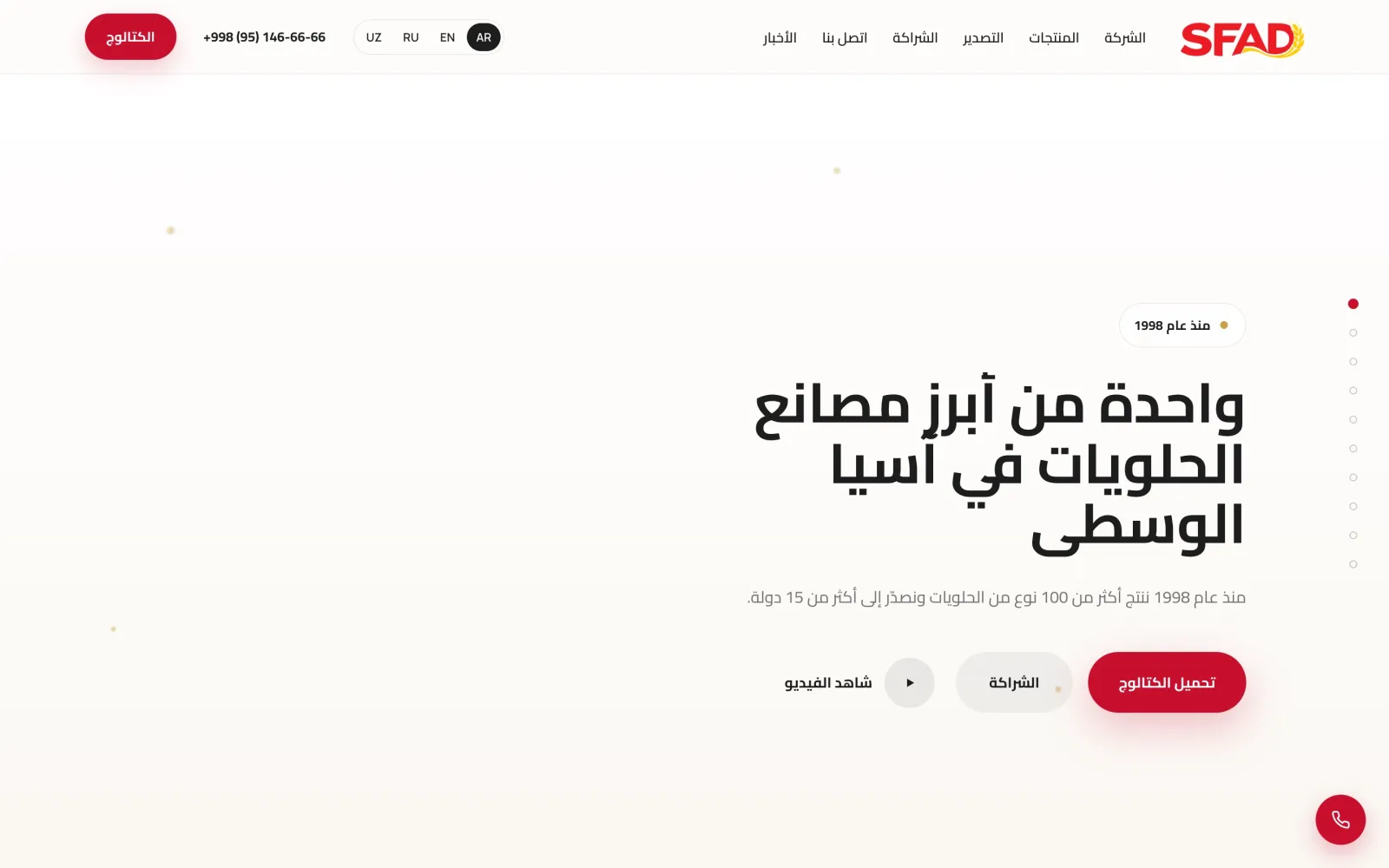
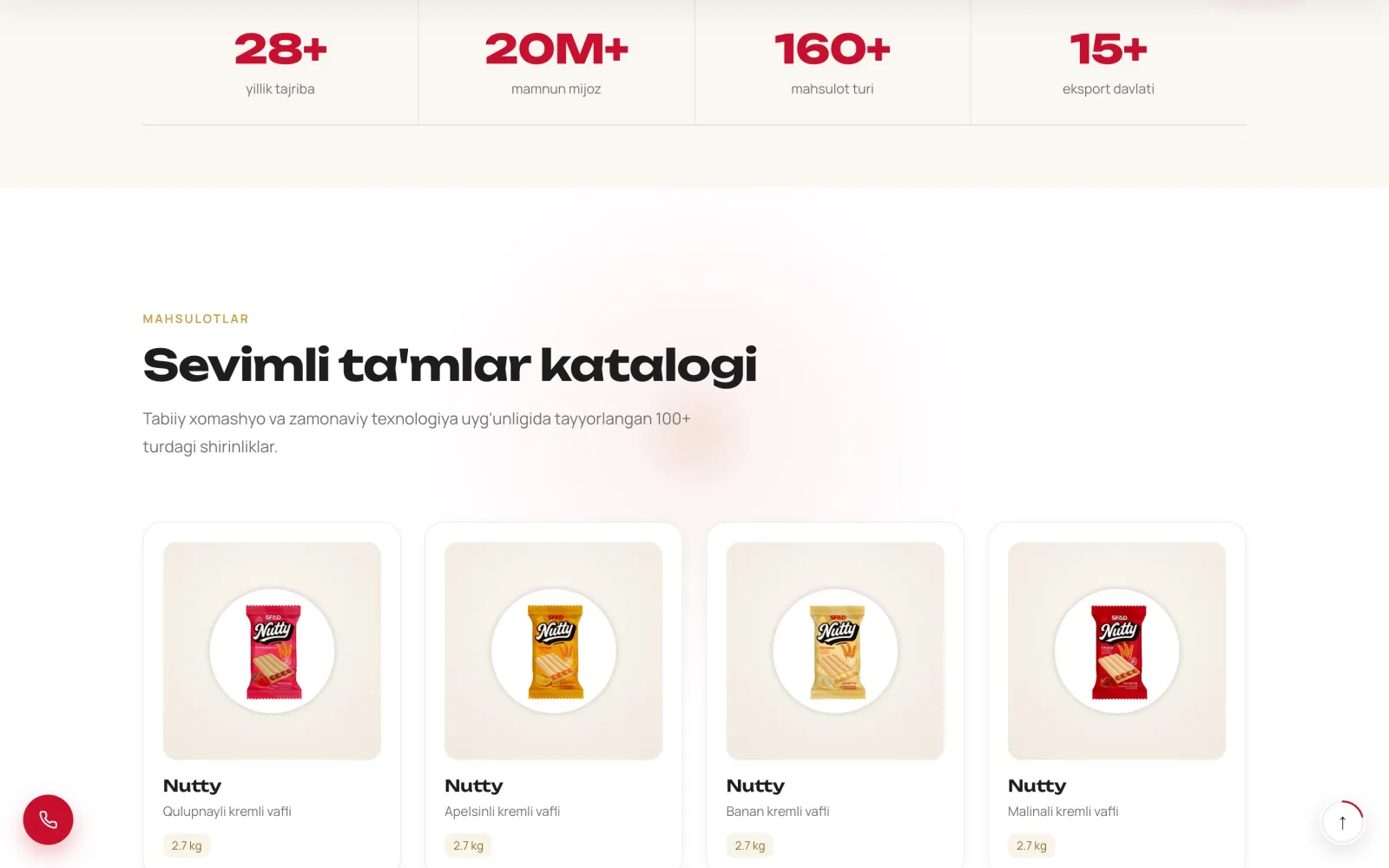
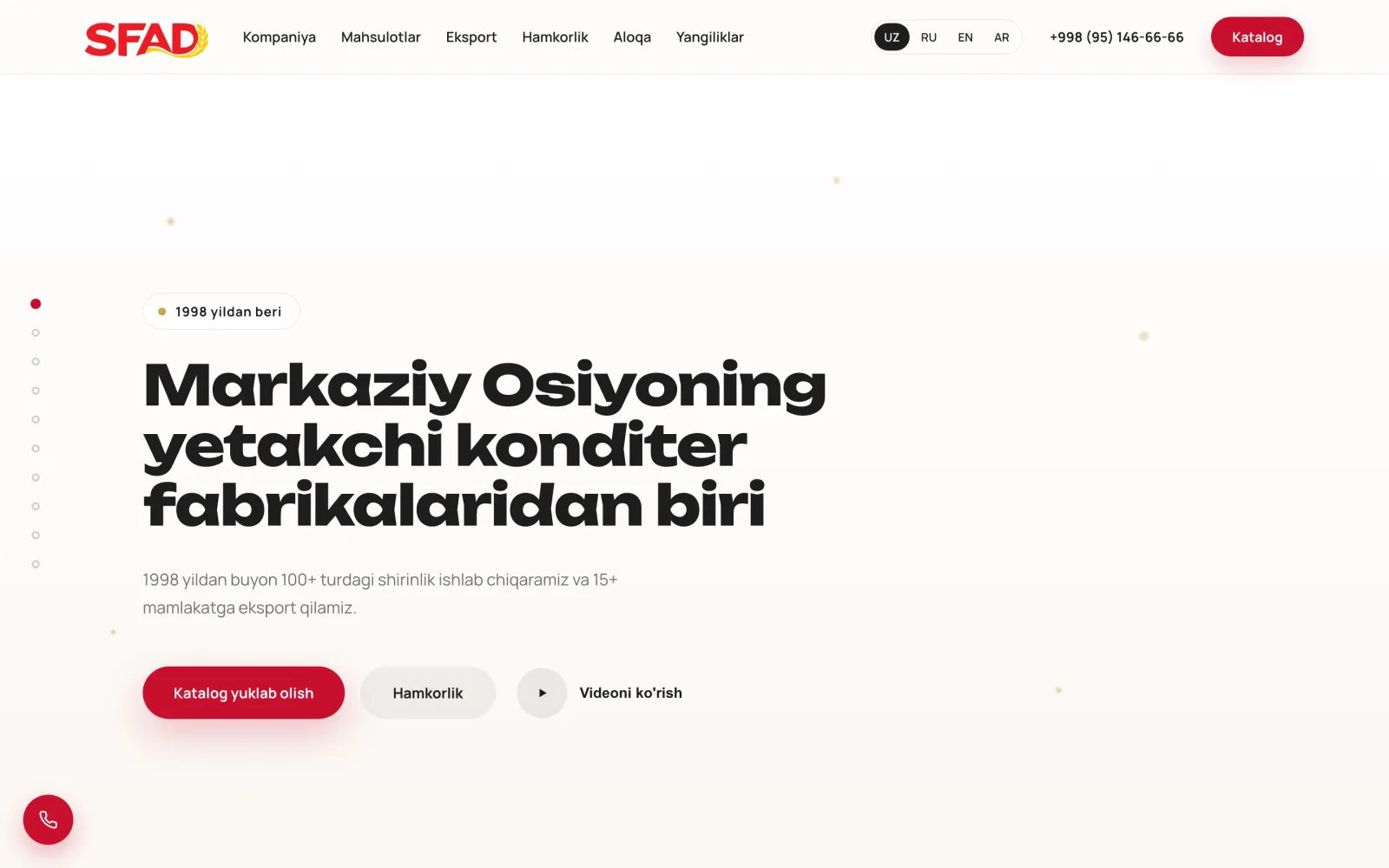
A 4-language site for confectionery export — Arabic included
A B2B corporate site with RTL support for entering the Arab market, with its own CMS.

Problem
The static site of a company operating since 1998 needed a developer for every change and didn't work for Arabic-speaking clients at all.
What I built
A B2B site in Uzbek, Russian, English and Arabic (RTL). Products, pages and a text editor — all in the admin panel; translations are edited in one place.
Result
The team updates the content itself, and the export section works in Arabic.
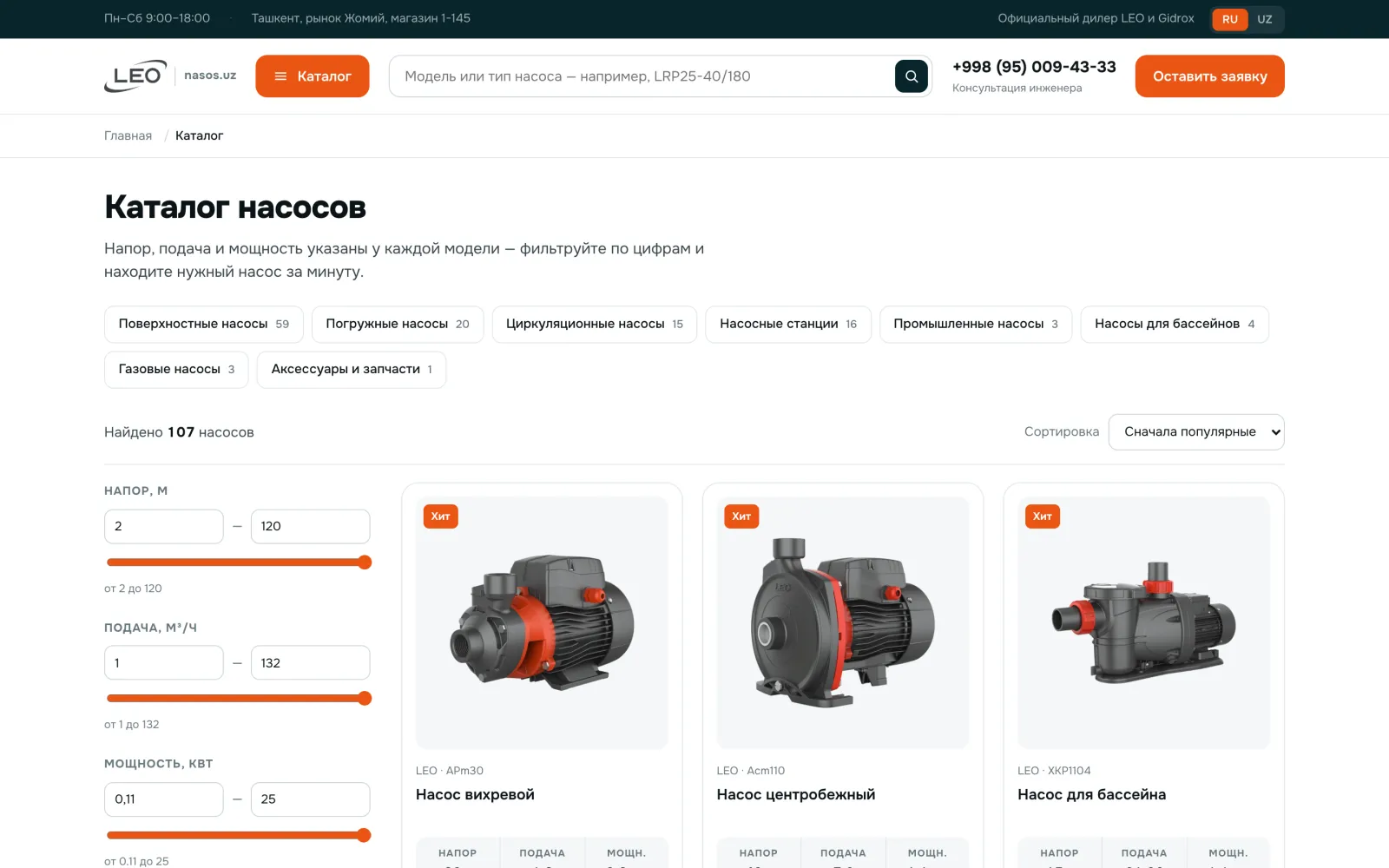
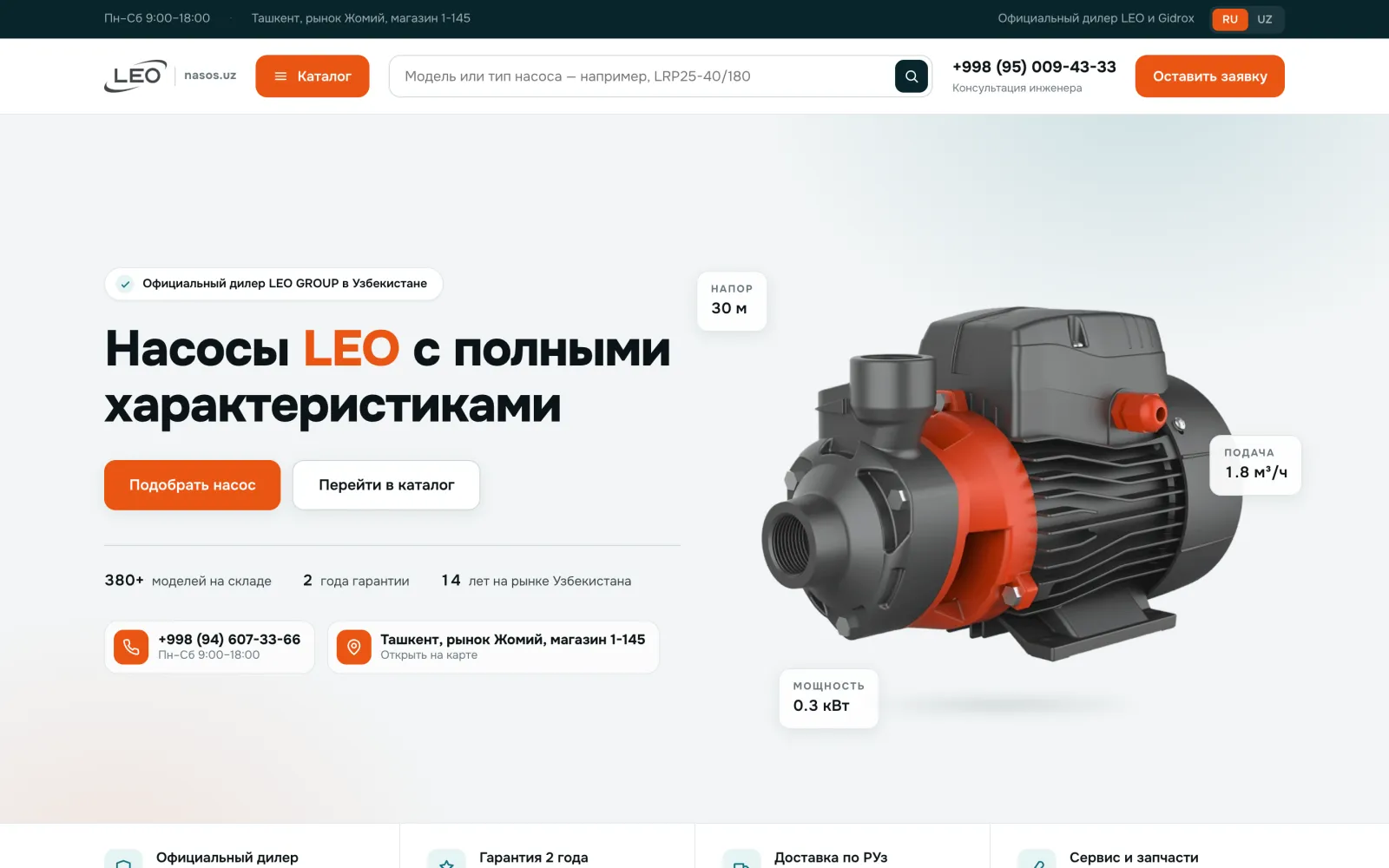
Pump dealer: a catalog you search by numbers and inquiries that don't get lost
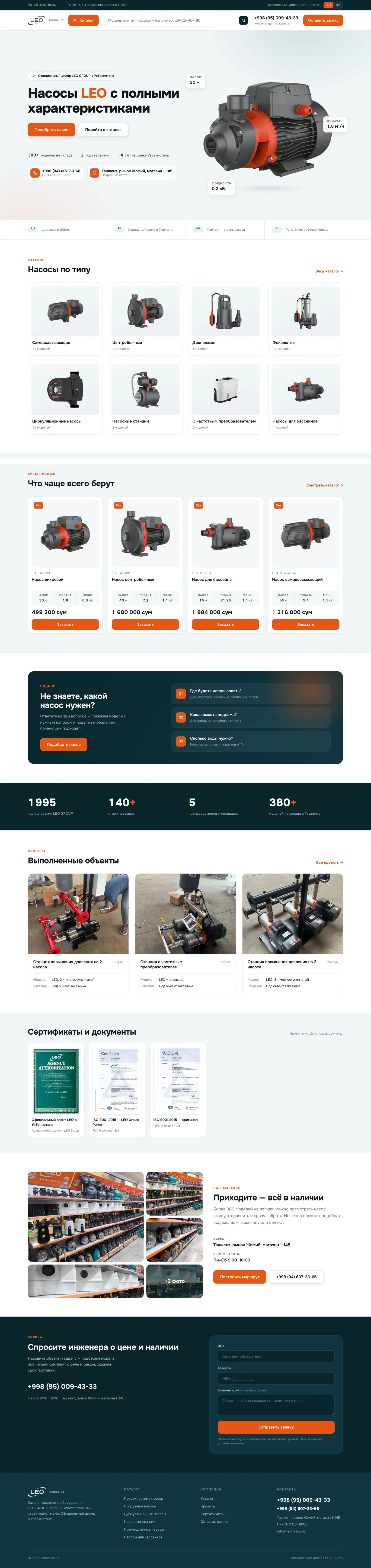
A bilingual catalog for the official LEO GROUP and Gidrox dealer: pumps are filtered by head, flow and power, and each inquiry goes straight to Telegram.
Problem
The old WordPress site wasn't maintained and made choosing a pump impossible: specs were buried in the description text, so finding the right model meant reading every page. Inquiries got lost in email. And the move couldn't drop the old pages that search engines already knew.
What I built
The catalog is built on numbers: head, flow and power are separate fields on every model, so they can be filtered with sliders and split by category. The site is in Russian and Uzbek. A 'pick a pump' form asks a few questions and the inquiry lands in the sales team's Telegram group. The admin panel runs products, brands, categories, certificates, the shop gallery, completed projects, news and inquiries. For the move I added 232 redirects from the old WordPress URLs, folded www into the main domain, and wrote the sitemap, robots and 404 page.
Result
The site runs at leonasos.uz with more than 100 models in the catalog, each with its specs. Inquiries arrive in Telegram rather than email. Old links point at the new pages, and the copy is written for Tashkent and Uzbekistan searches.

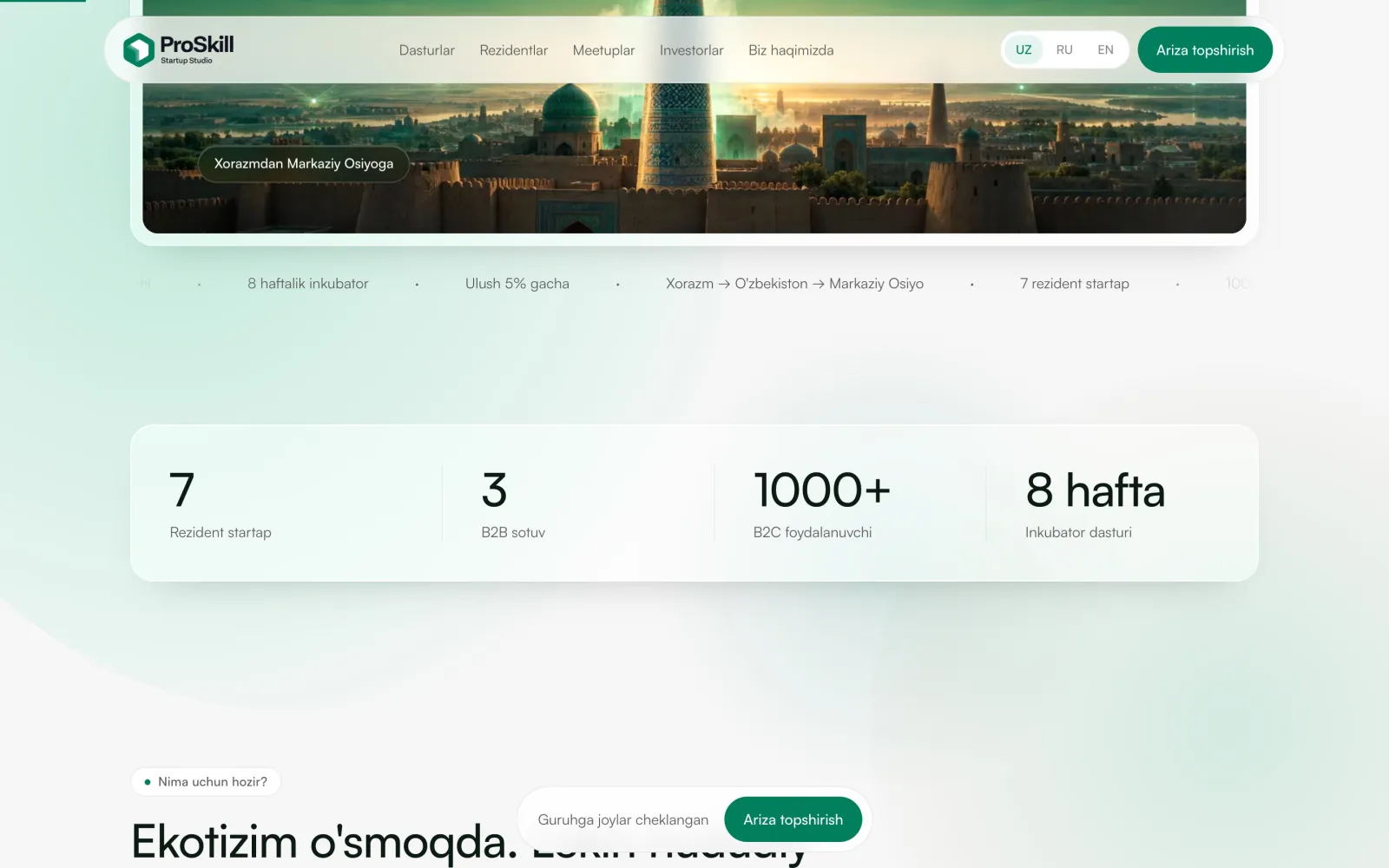
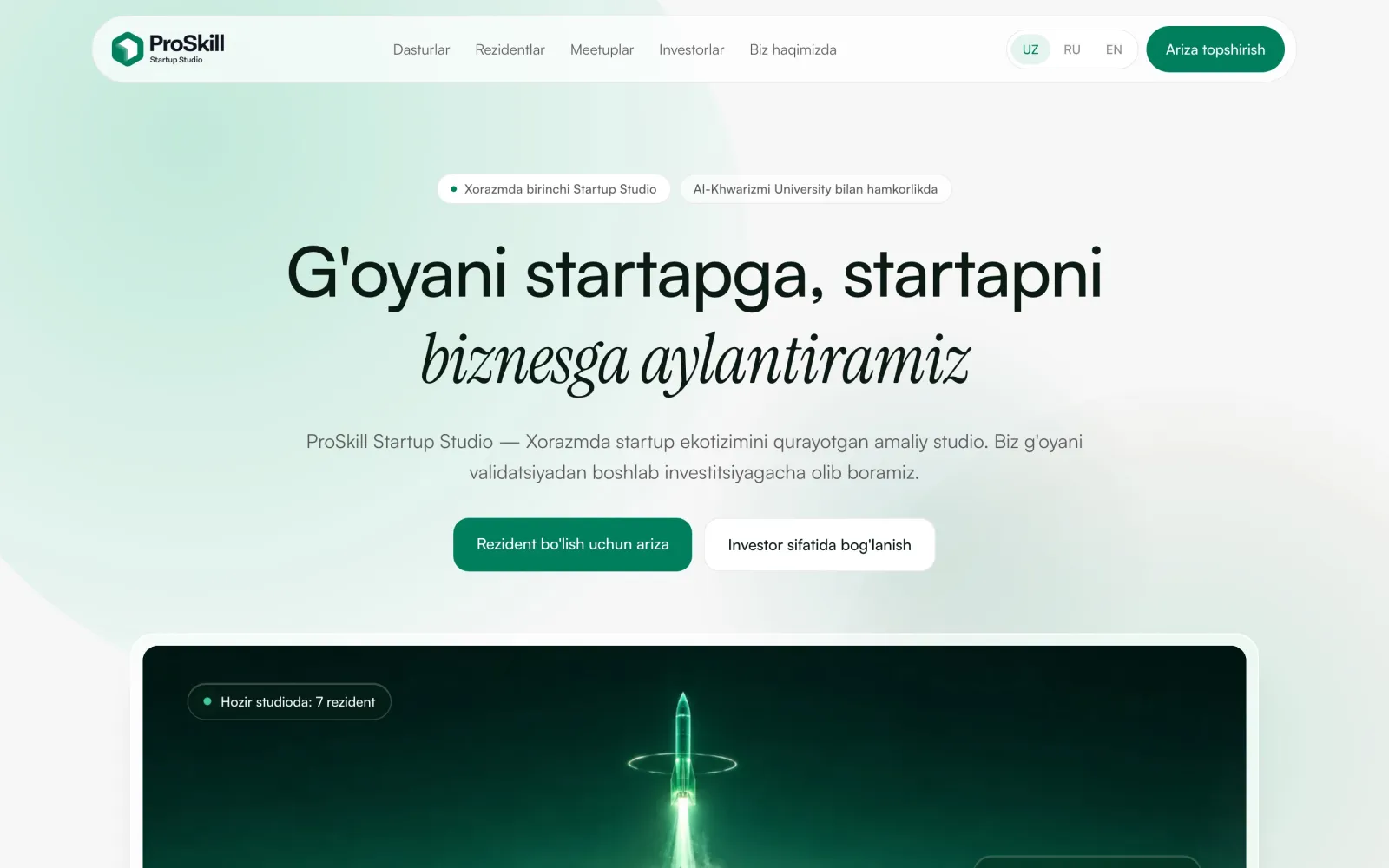
A fast-loading landing page for a startup incubator
A lightweight page built straight from the design into production HTML — no extra code.

Problem
The Khorezm incubator's old page looked dated and said little about its mentors and programs.
What I built
A build that turns the design directly into production HTML: WebP images, bundled fonts, no framework.
Result
The page weighs a few hundred kilobytes — it opens instantly even on mobile data.

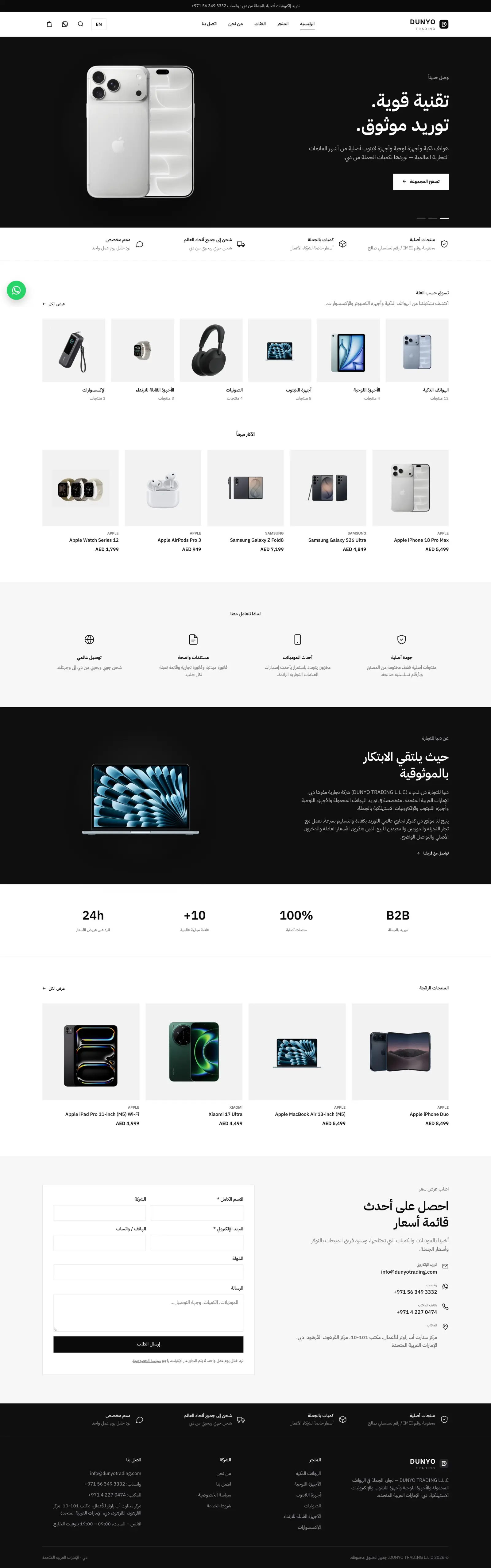
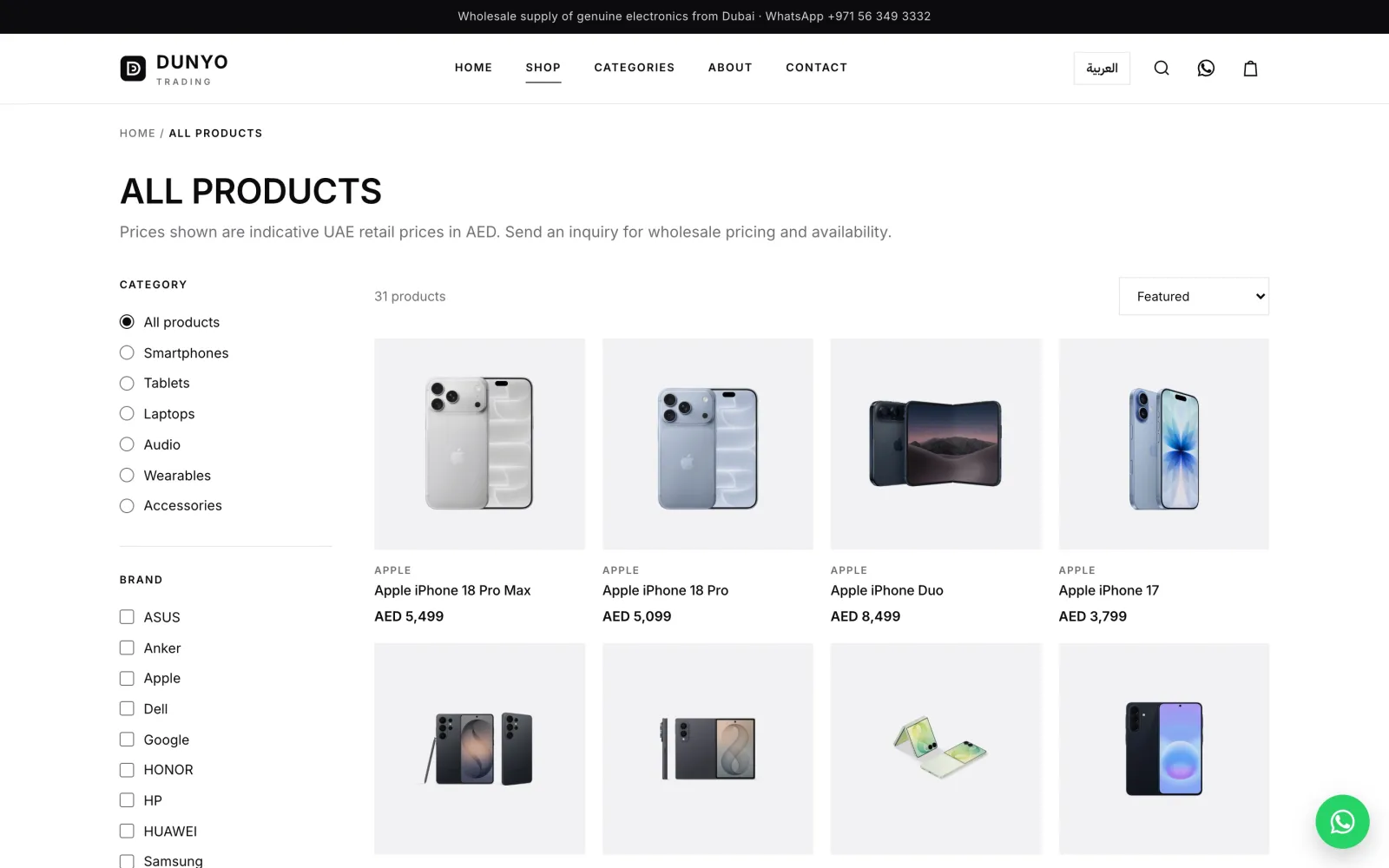
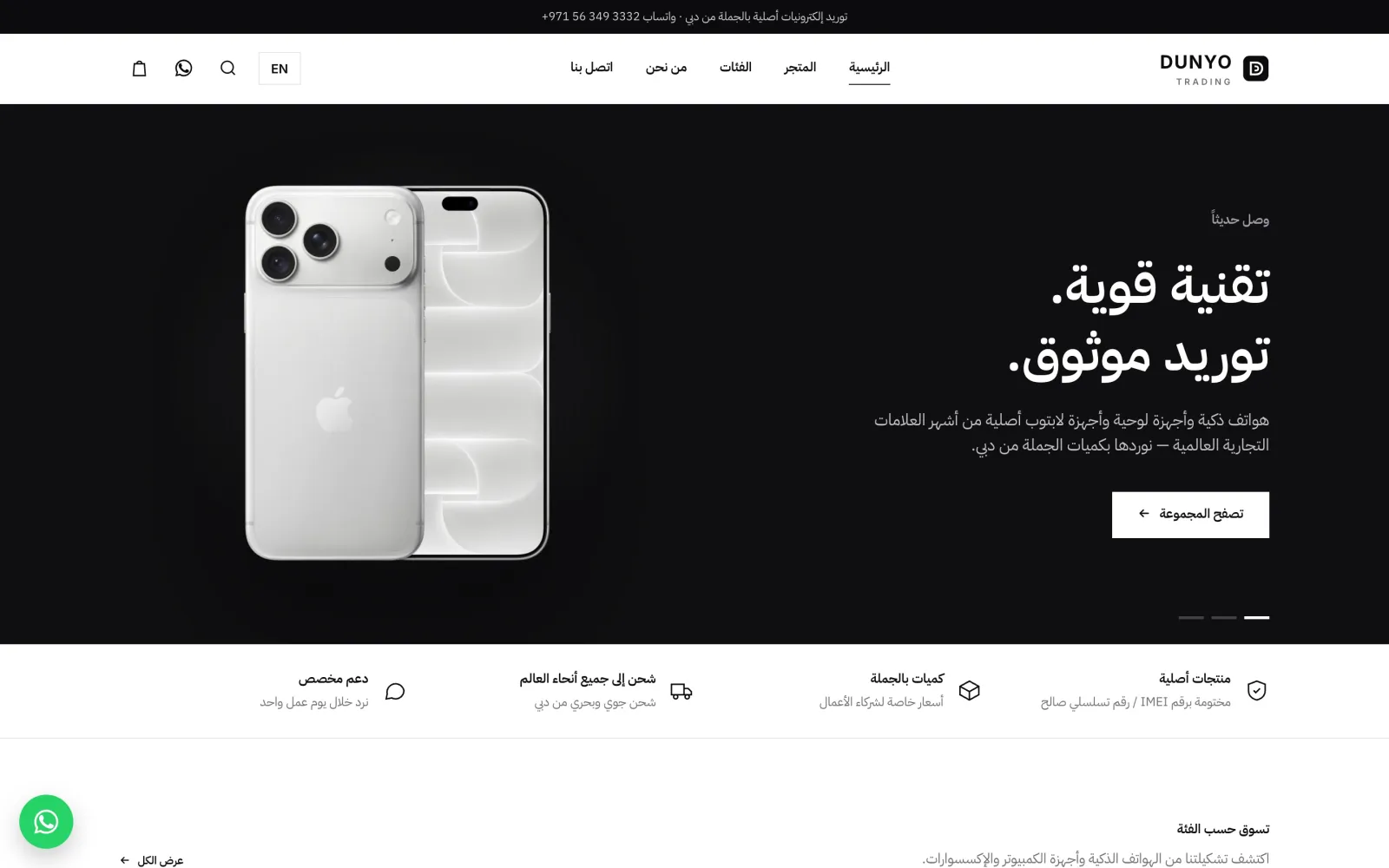
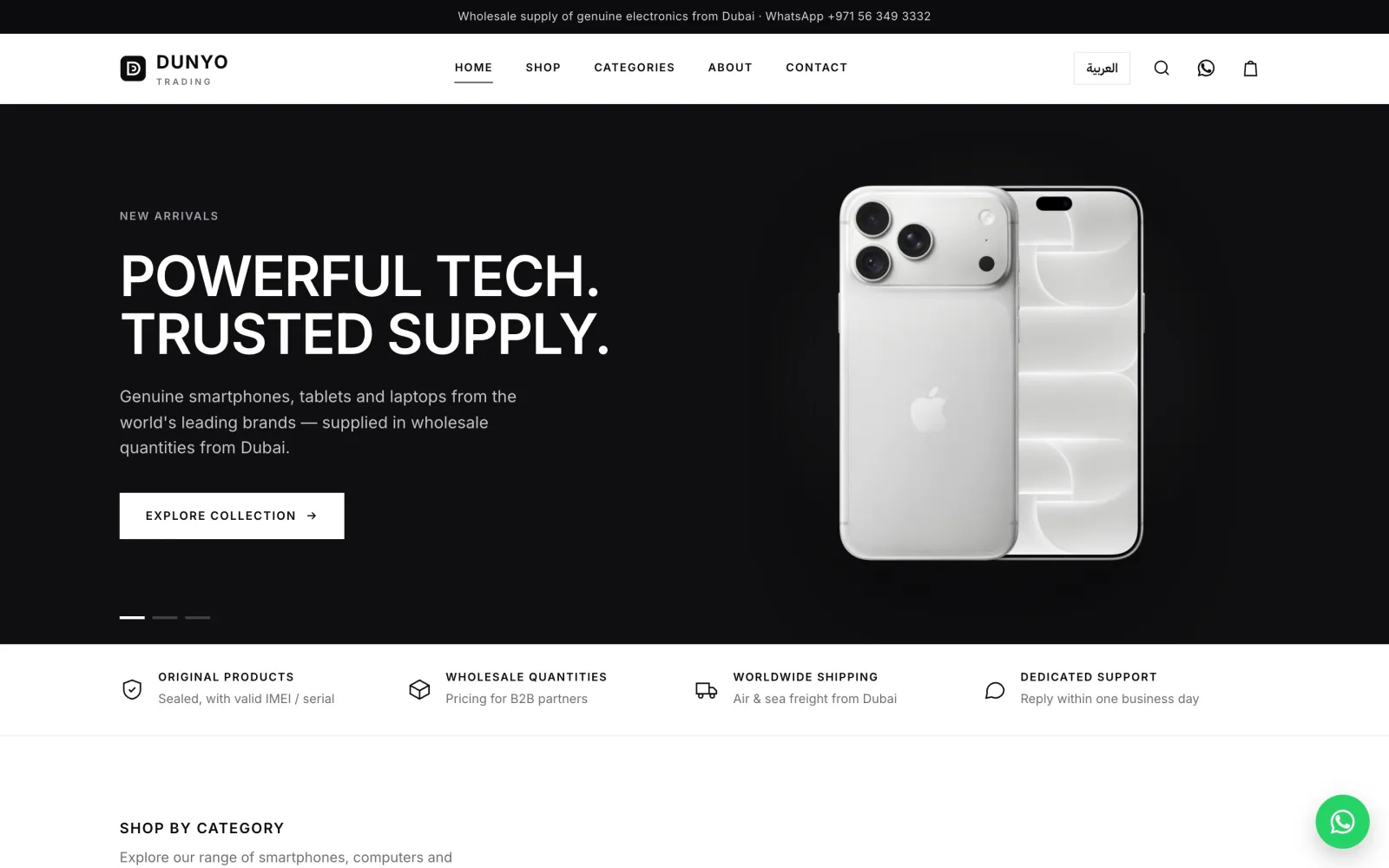
A bilingual catalog site for a Dubai electronics firm
A Dubai firm trading phones and electronics needed its own domain, a working mailbox and a site that would pass verification.
Problem
The firm needed to verify its business with platforms, which requires a domain, a mailbox on it and a real company site. The site isn't a store — it takes no payments, it shows the range and the contacts.
What I built
A static site based on the minimalist store design the client liked: home, catalog, product page, contacts and legal pages. Prices for 31 products come from official UAE retailers and are shown in dirhams. Two languages — English and Arabic, with the whole page flipping right-to-left in Arabic. There's a request cart but no checkout: the form is emailed to the firm's mailbox. Deployed on Vercel, domain on Namecheap with mail on the same domain, the site added to Search Console and the maps profile verified.
Result
The site is live at dunyotrading.com, with the mailbox and the maps profile verified. Adding a product means one row in a single file, Arabic text included.
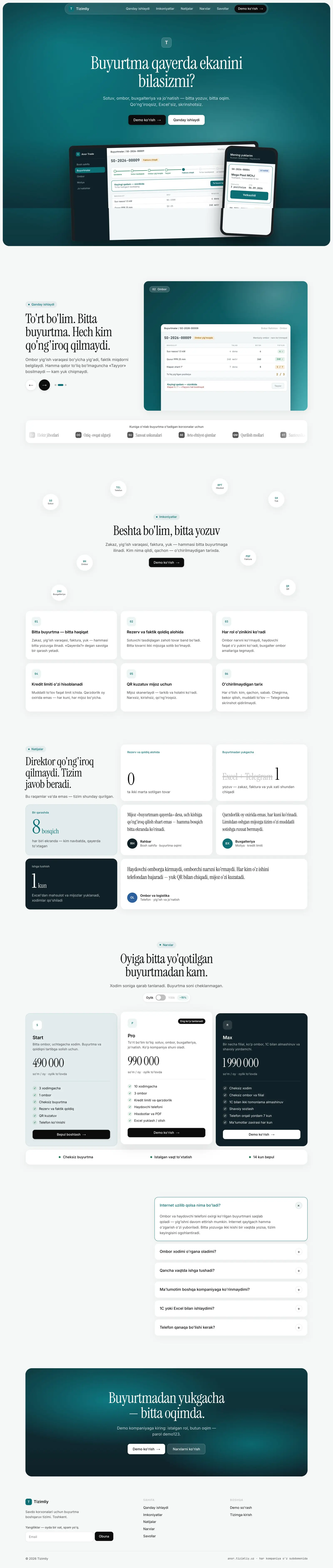
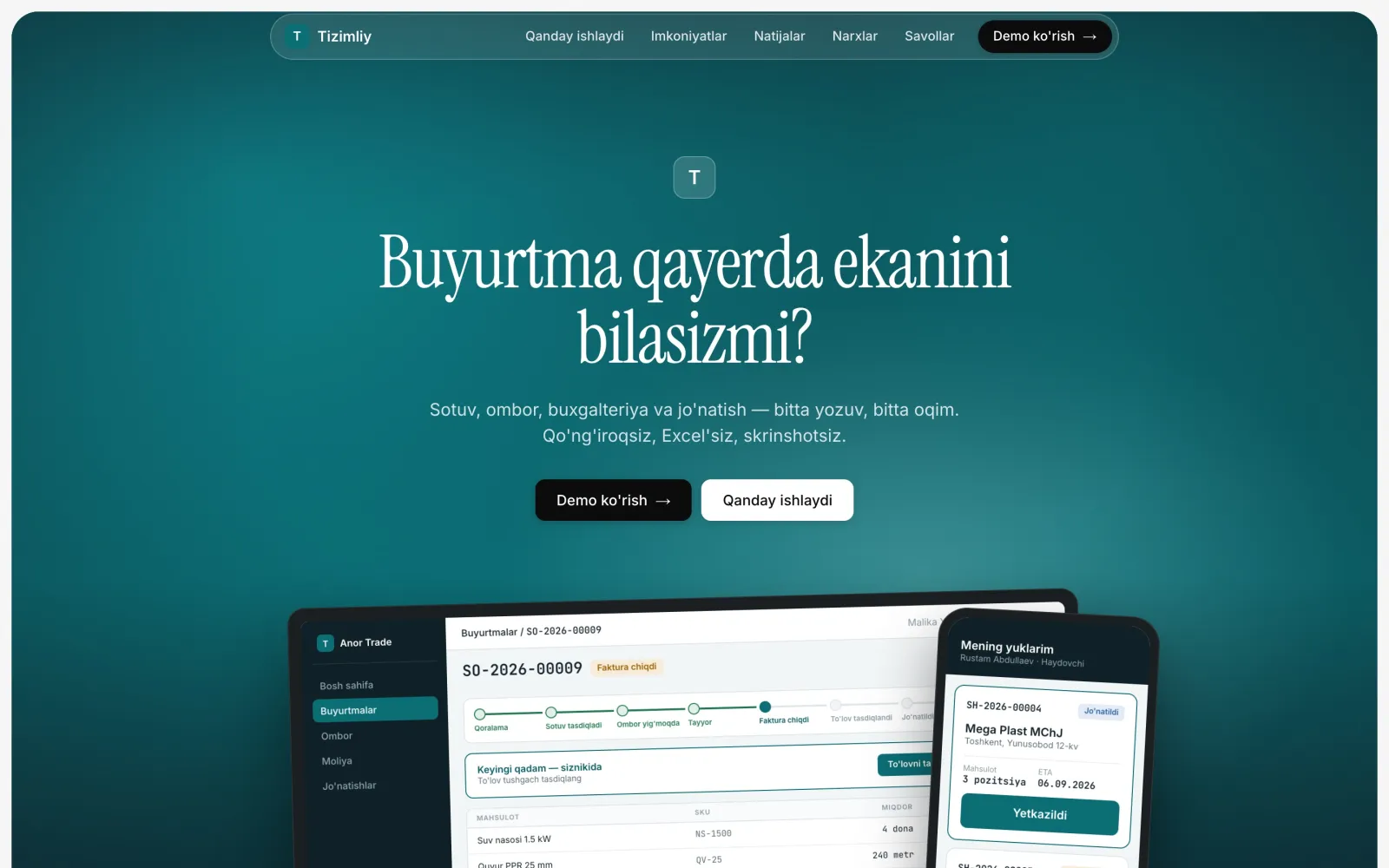
From sale to shipment — in one system
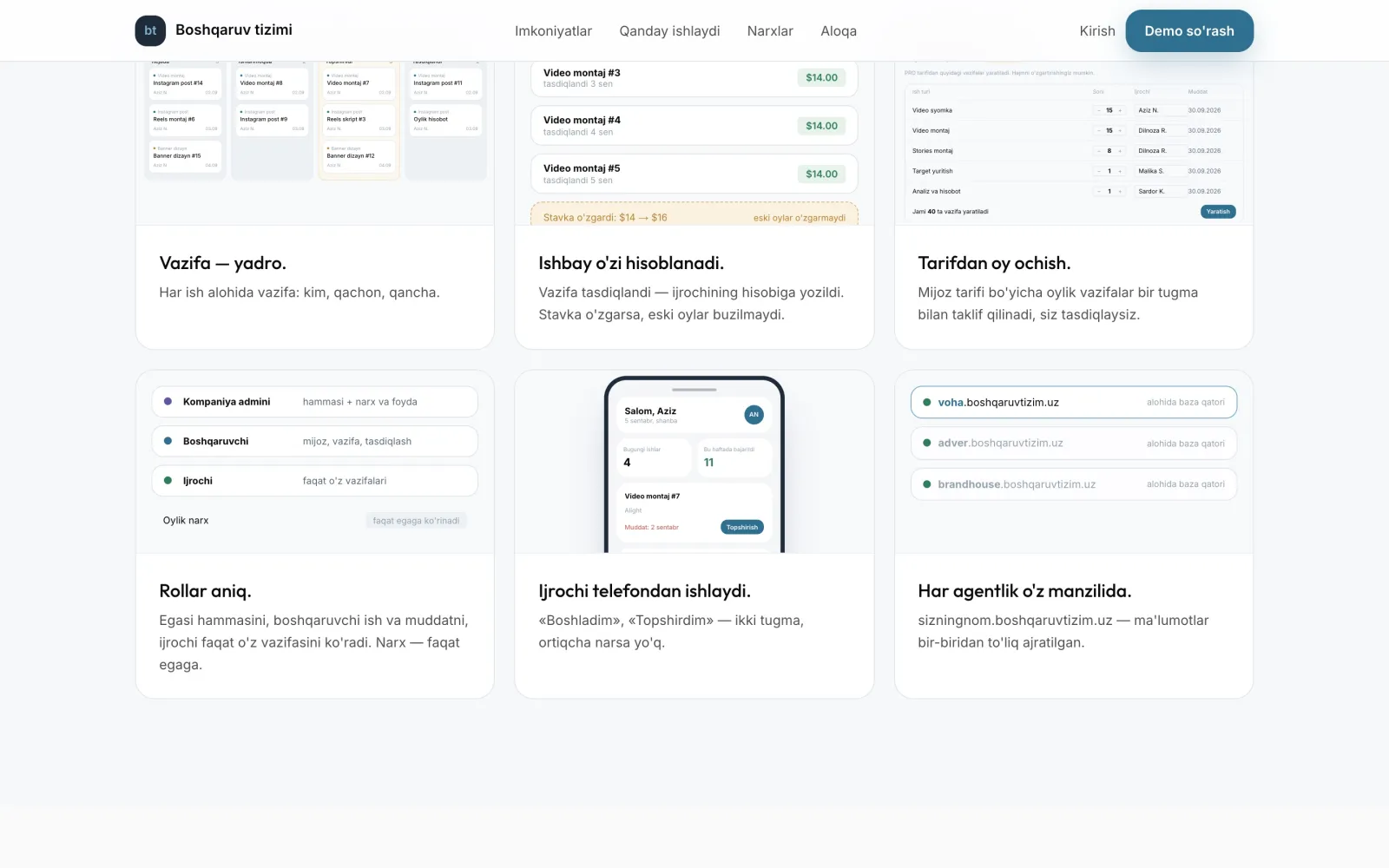
A multi-company SaaS: sales, warehouse, accounting and logistics run as one flow.
Problem
Sales, warehouse, accounting and logistics lived in separate Excel files and chats — finding where an order was stuck always took a phone call.
What I built
Each company gets its own subdomain and 6 roles: manager, sales, warehouse, accountant, logistics, driver. Data is isolated in the database itself with Row-Level Security — one company can't see another's rows. Warehouse staff and drivers work from their phones, and shipments leave by QR. The sales page was ported one-to-one from the Claude Design mockup.
Result
The system is live at tizimliy.uz: each company works on its own subdomain, and a demo company lets you walk the whole flow in any role.
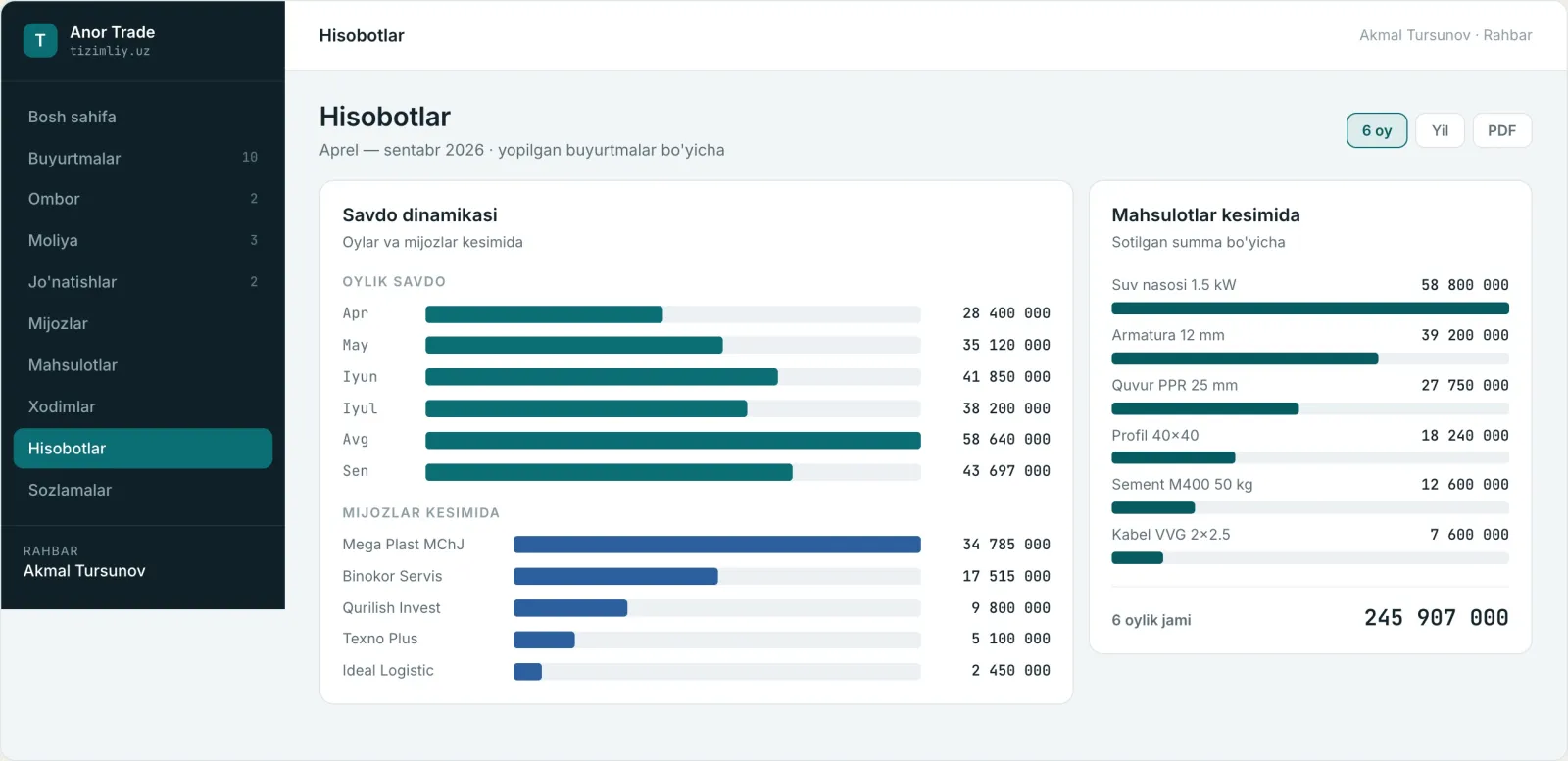
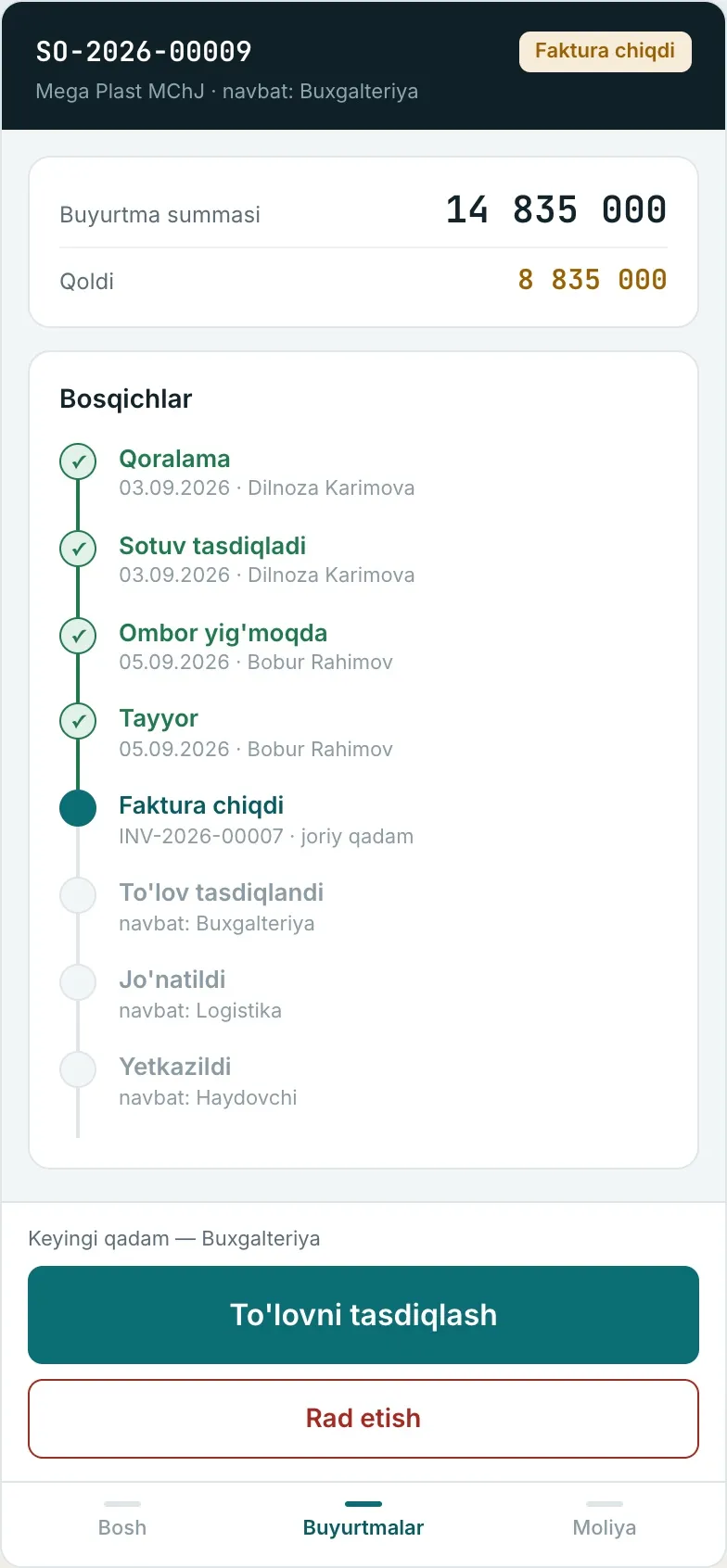
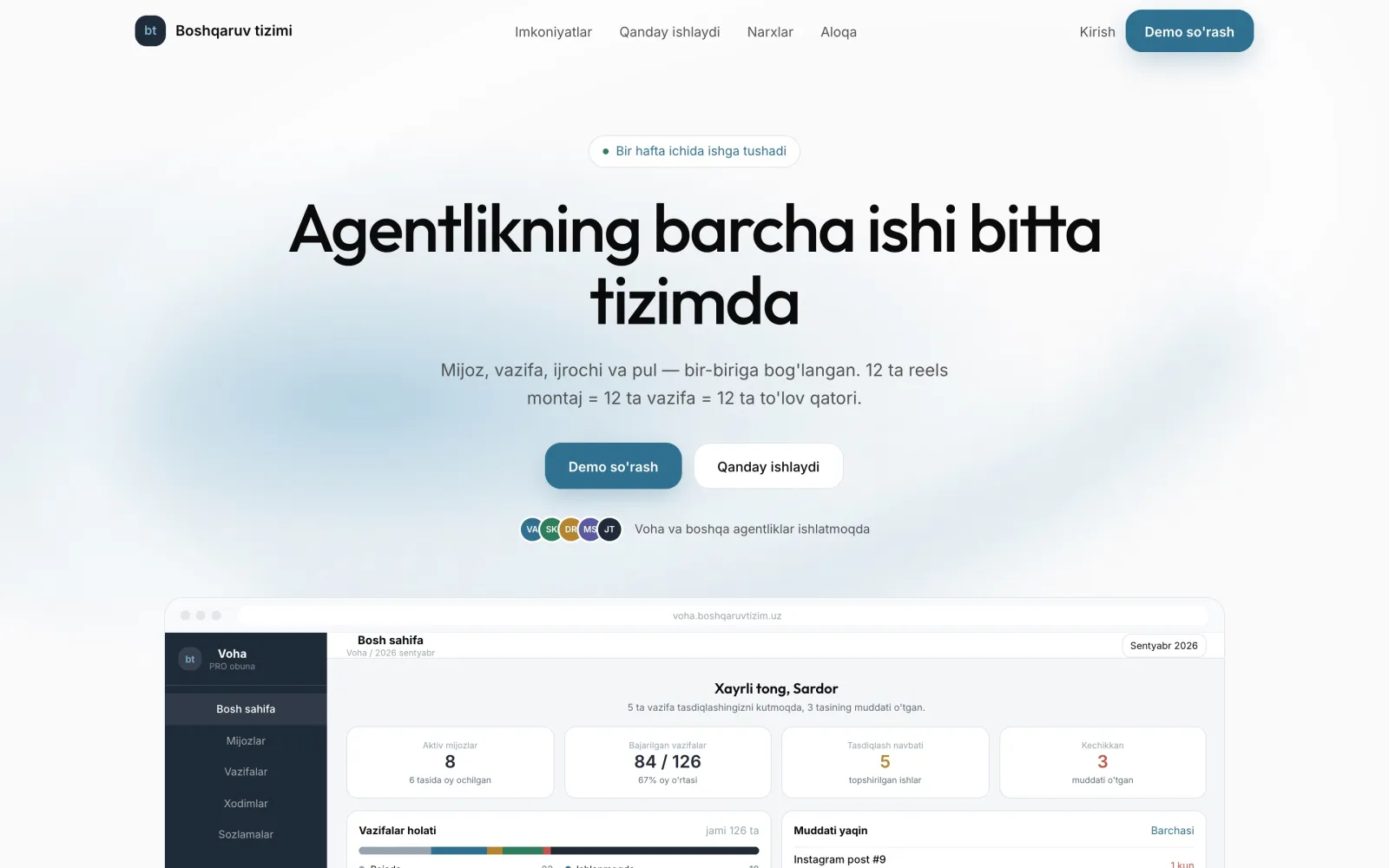
An internal management system for a marketing agency
Clients, monthly plans and tasks — an internal dashboard the manager sees on one screen.

Problem
The agency tracked clients, monthly plans and tasks across different spreadsheets and chats; who did what only became clear at month end.
What I built
A client list, opening each month separately, a task kanban and role-based permissions. Built multi-tenant so several agencies can use it.
Result
Monthly plans and tasks in one place — no digging through chats to check status.

I turn work that kept repeating across client projects into products. I used to build a learning platform for each client separately — now it sells as a ready LMS theme and plugin.
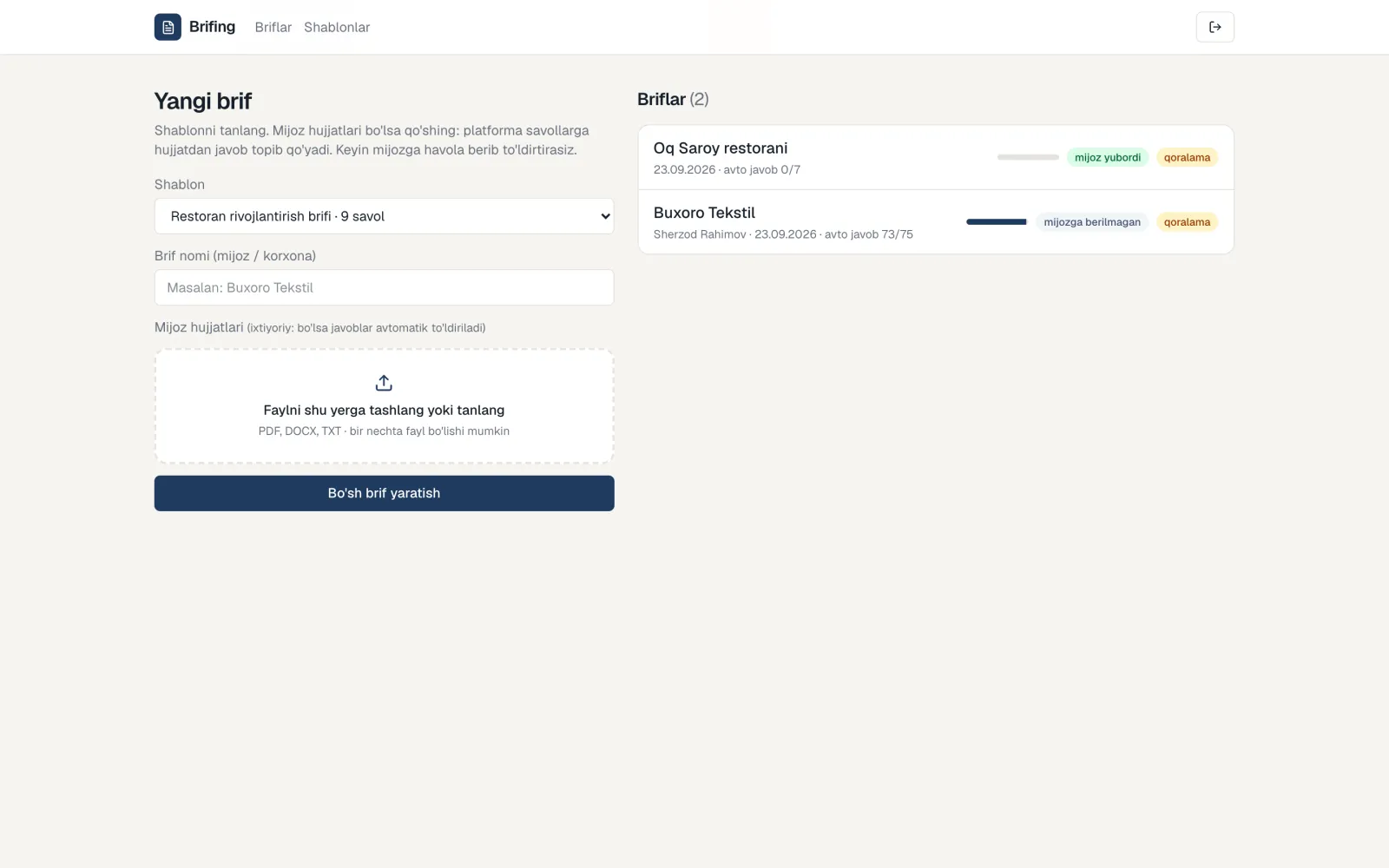
A platform that pulls the questionnaire out of the client's document: it fills in the answers the text contains, the client writes the rest through a link — no AI, just algorithms
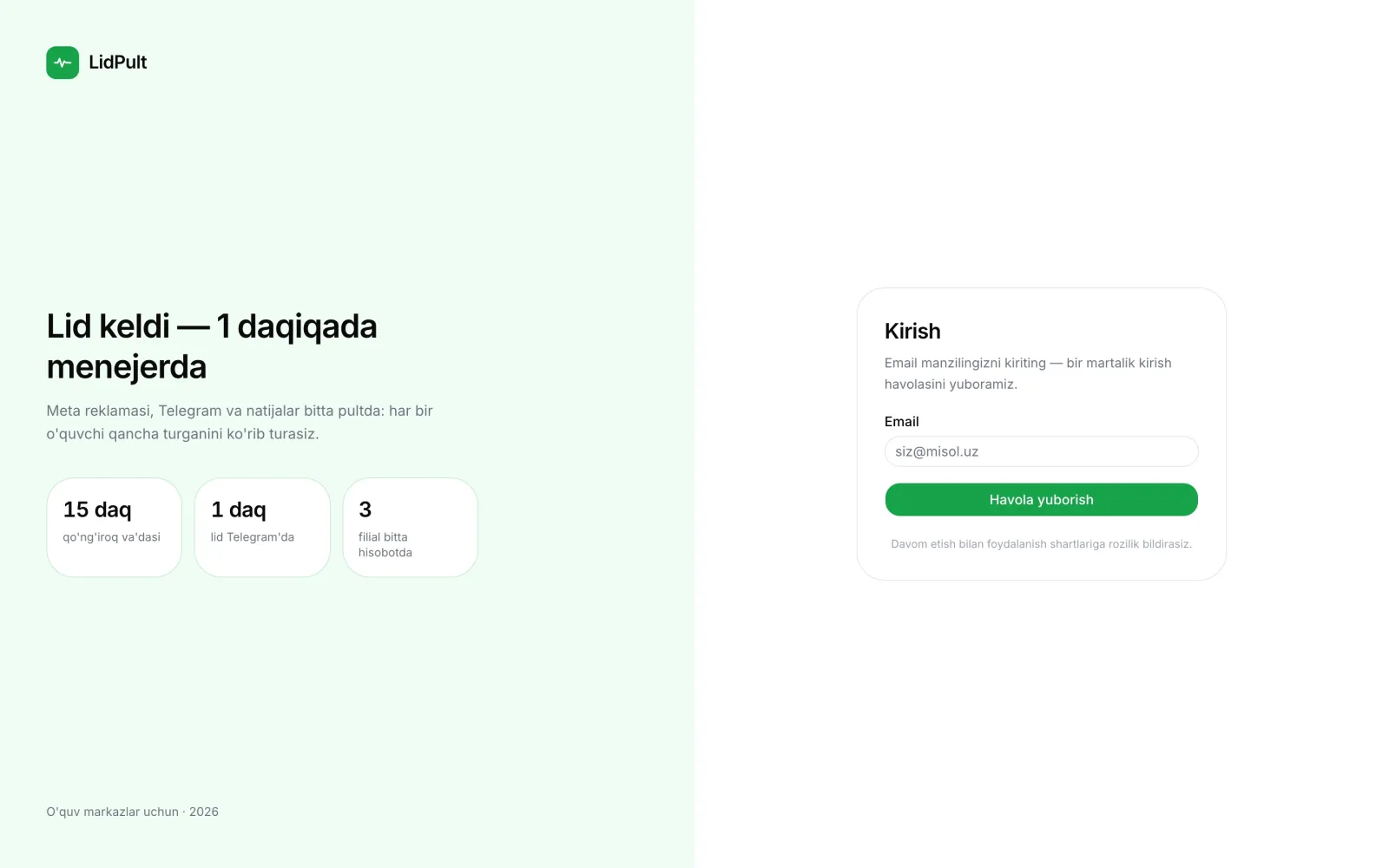
A Meta lead-ads console for training centers: every lead reaches a manager on Telegram within a minute, with ad spend and results in one report
SaaS for marketing agencies: clients, monthly plans, tasks and piece-rate pay — each agency on its own address
A training-center CRM built on Frappe CRM: Facebook leads flow in automatically, an Uzbek-language funnel and round-robin assignment to managers
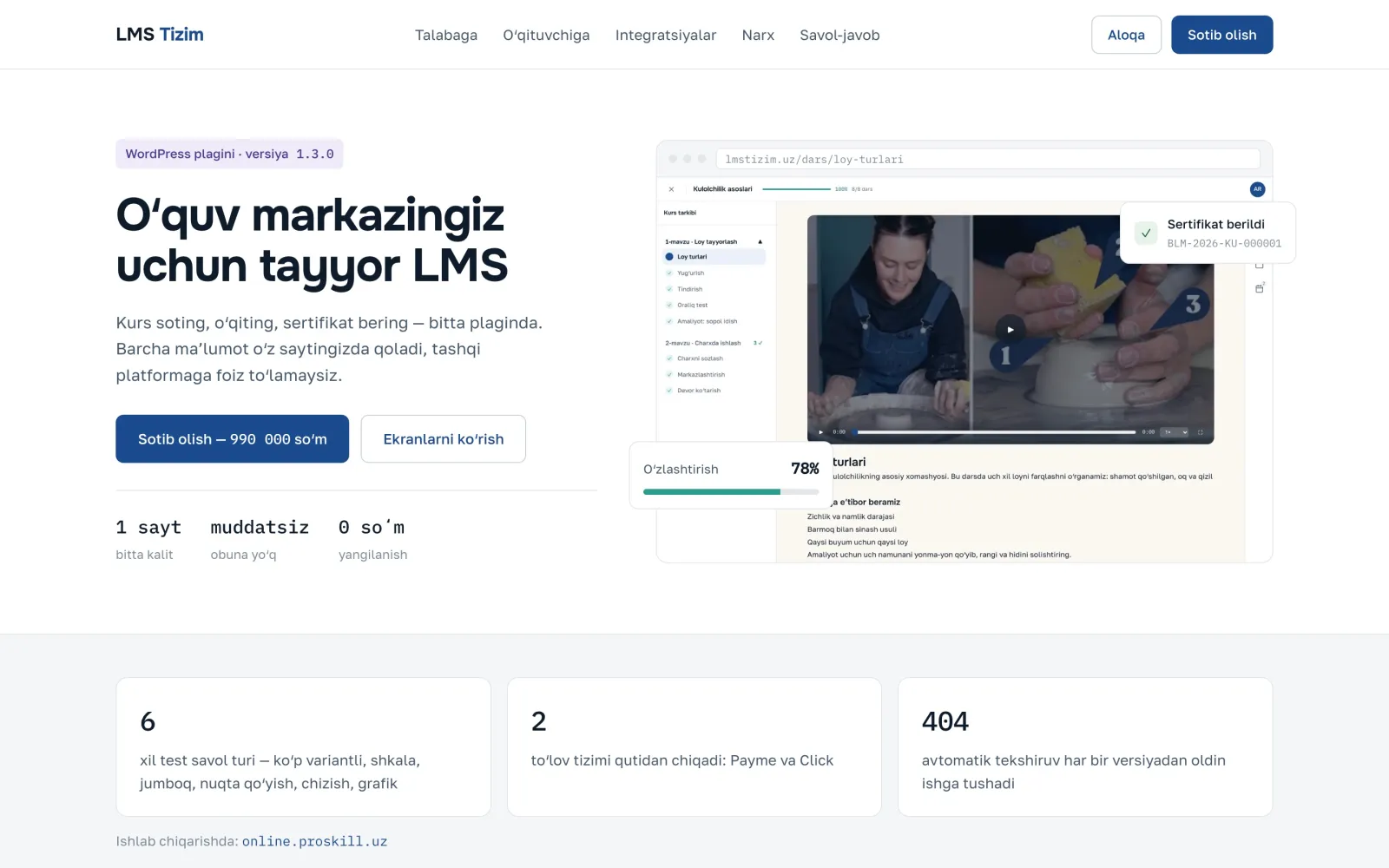
The store for an LMS theme and plugin for WordPress, with its own license server
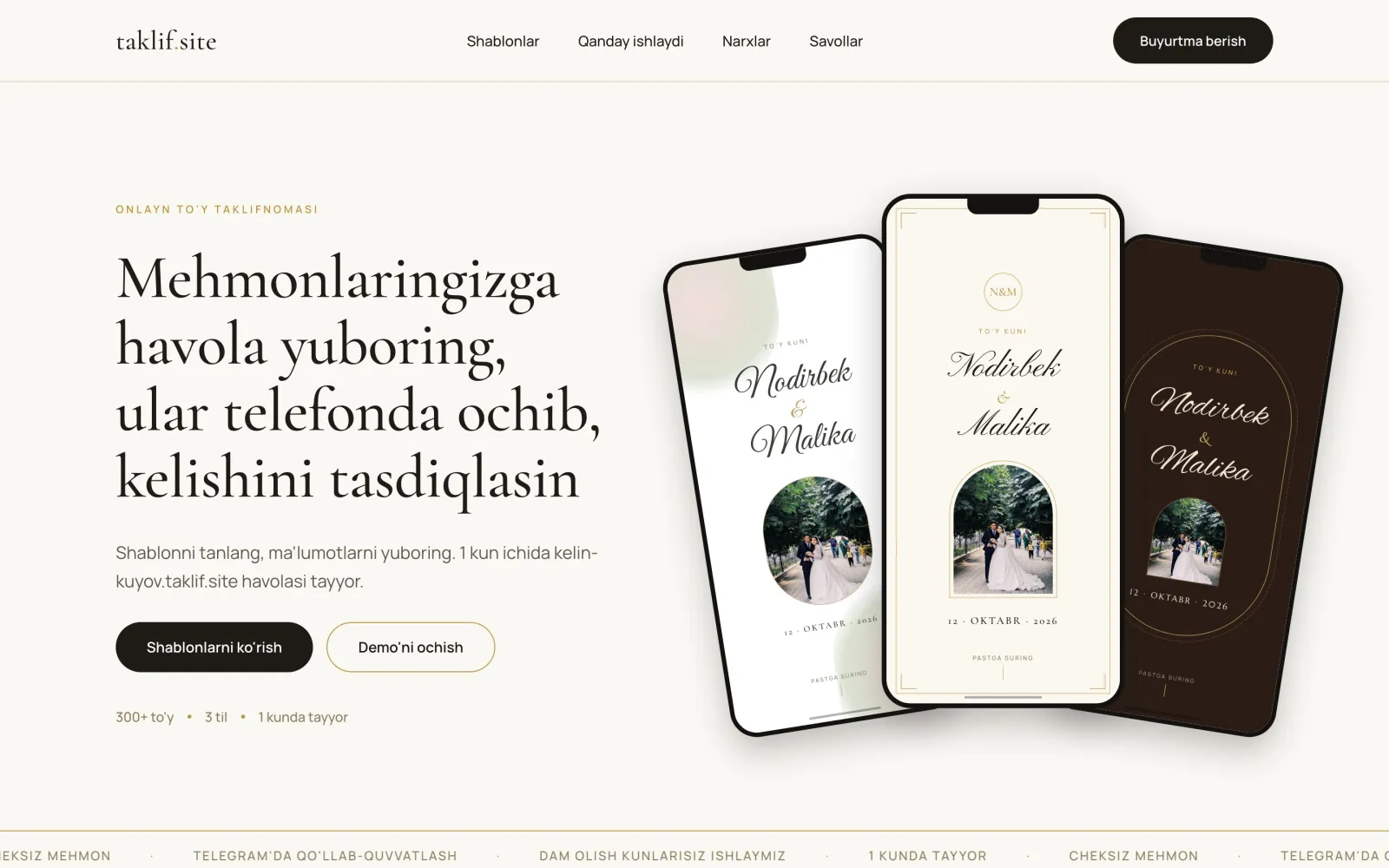
Online wedding invitations: ~20 templates, each couple gets its own subdomain
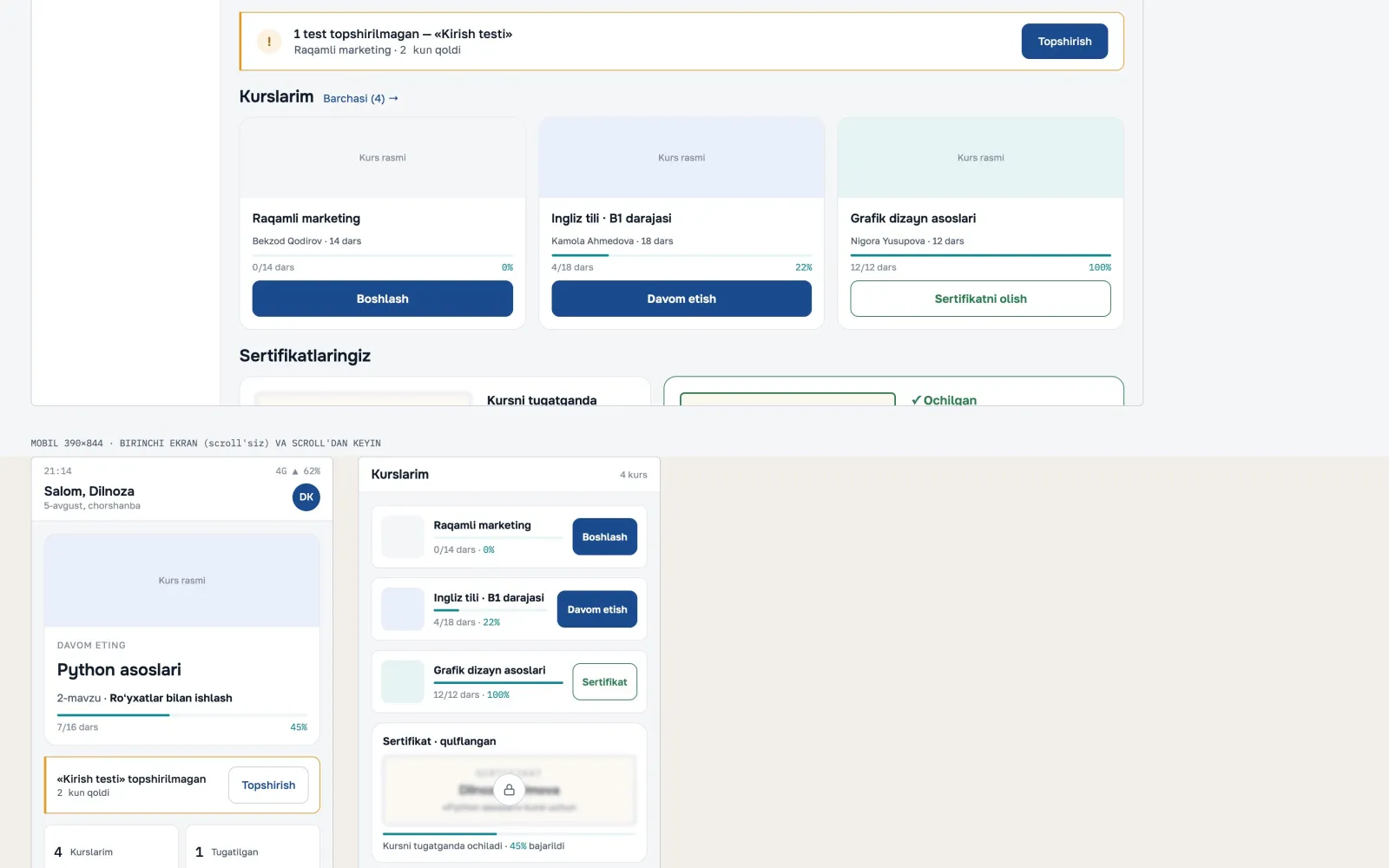
A learning platform without WordPress, built from a 45-screen design system
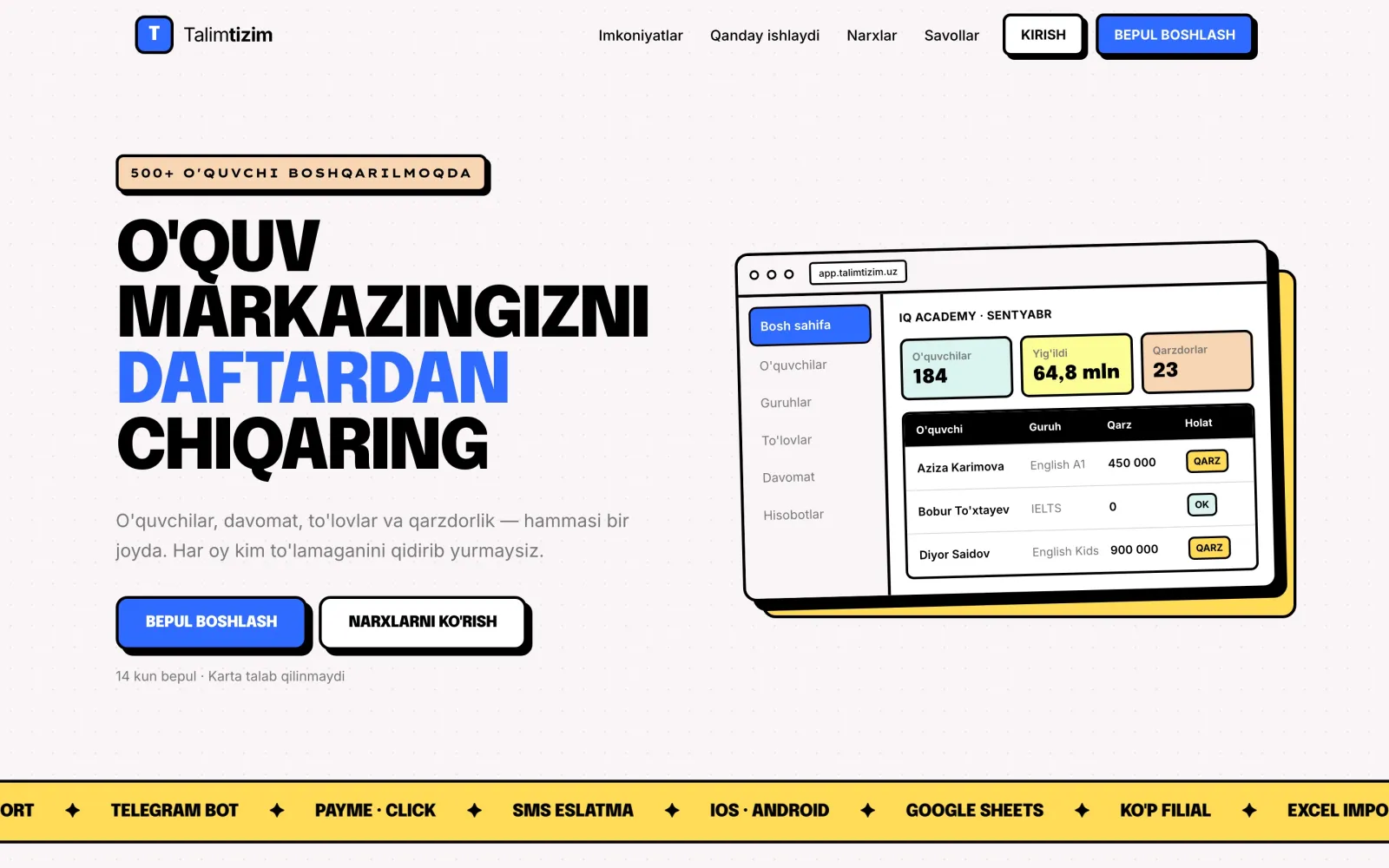
SaaS for training centers — web panel + student app
Hi, I'm Xudoyor.
I started with no-code — now I build complete systems with AI.
I'm from Khorezm. My path began with no-code: I built over 150 websites on WordPress and Tilda — from corporate sites to online stores and learning platforms. I wrote my own plugins instead of paying for them, and wiring up amoCRM, Payme and Click became routine.
I didn't stay just a developer: I led a project team at Alifbee, worked as a No-Code Expert at Startup Garage and as COO at Wasaf Int Solutions. So before writing code I study the business — who does what, where paperwork gets lost, where money leaks.
Today I work with AI: with Claude Code and Next.js one person builds at a team's pace. I turn a quickly assembled prototype into a working product — with a database, roles, security, a server and deployment. From a QR system on a factory floor to an export site in Arabic.
I share what I know — the Tutorials section will host lessons on building real projects with AI and no-code.
Book a callWhat I'm into right now
How I work
Before writing code, I understand how the business works. Automating a broken process just speeds up the chaos.
I'm straight about deadlines, price and problems. Bad news beats good news that comes late.
Not «almost done» but a working product: with a server, a domain, an admin panel and a walkthrough of how to use it.
Every project gets an admin panel — changing a text or a price shouldn't require messaging me.
What I work with
Practical lessons on how I build real projects: Next.js, PostgreSQL, deployment and coding with AI.